Coarse vs Fine Thread Pitch in Fasteners
Fasteners are often employed in many different fields of work with the primary objective of holding parts together securely and keeping structures stable. There are many things that affect how well a fastener works, such as the material, coating, and strength grade. However, the thread pitch is one of the most significant. The thread pitch is the space between two neighbouring threads. It has a direct effect on how a fastener grips, spreads load, and does its job in different situations.
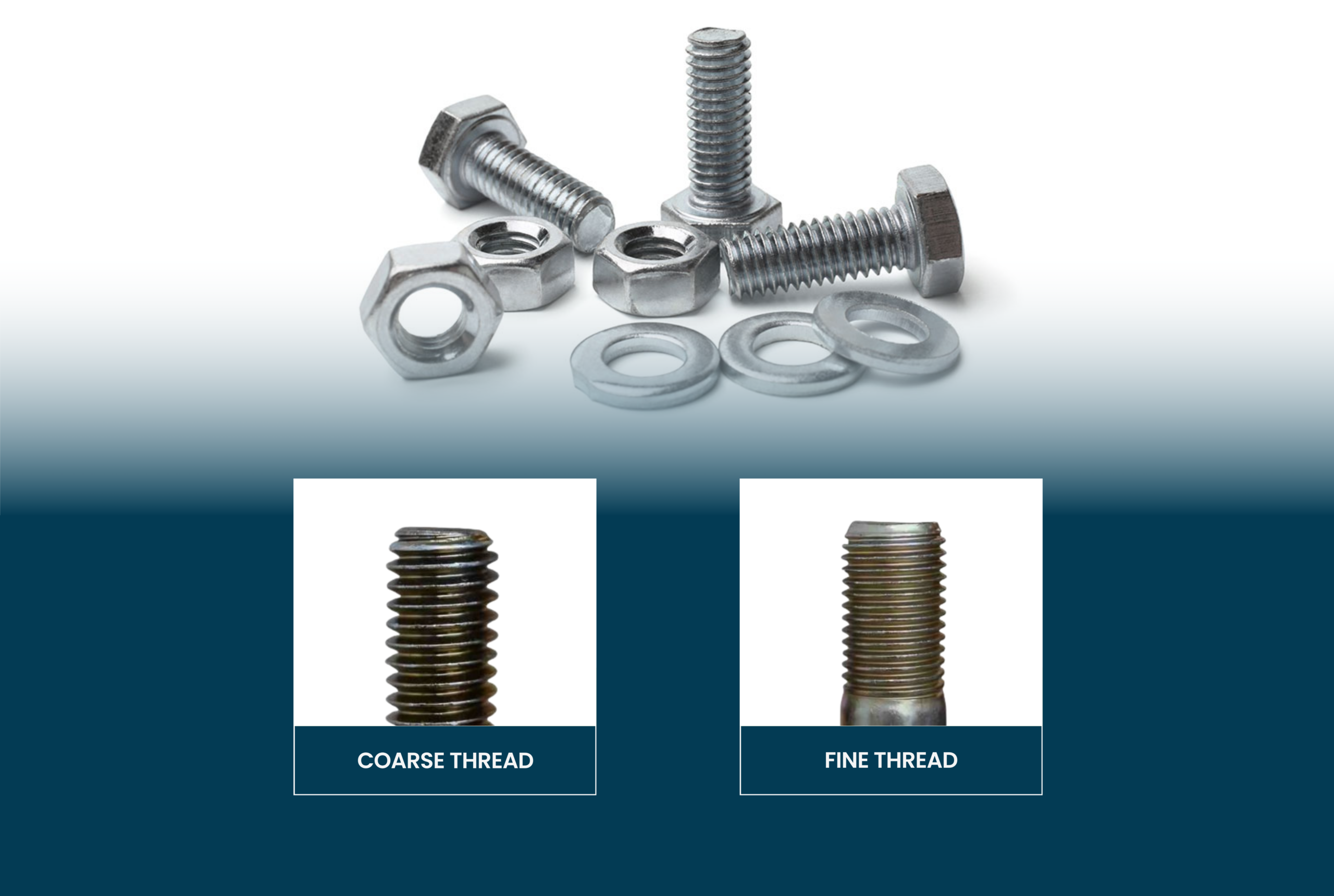
Thread pitch is one of the most critical yet frequently ignored factors in fasteners. It directly affects how well a bolt, screw, or threaded rod works in real life. It tells you how far apart the threads are on the shaft. When using the metric system, pitch is the distance in millimetres between two threads.
Coarse Thread Pitch in Fasteners
Coarse threads may swiftly bite into materials because they are spaced more apart. Coarse threads are also better at handling dirt, debris, and little amounts of damage. This feature helps keep performance steady in places where cleanliness can’t be assured, such building sites or outdoor installations. Coarse pitch fasteners may still work well even if the threads are a little worn or dirty.
Another good thing about coarse threads is that they are easier to install. To fully engage, you need to turn less, which makes high-volume assembly or repetitive activities more efficient. This makes them very helpful in factories where time and productivity are very important.
But coarse threads may not be as precise or easy to clamp as fine threads. They are not usually the best solution for jobs that need precise load distribution or tight tolerances. Coarse pitch threads are very easy to put together, which is another great thing about them. Even yet, their overall strength and dependability in ordinary applications make them one among the most common forms of thread used in engineering.
Fine Thread Pitch in Fasteners
Fine pitch threads generally provide better tensile load distribution since more threads are engaged. The load is spread out more evenly down the length of the fastener because more threads are engaged. This makes it more resistant to pulling forces. Fine threads are perfect for uses where strength and dependability are very important, including in aircraft parts, car engines, and high-pressure equipment. Fine pitch threads also provide you more control and accuracy.
Because the threads are so close together, each rotation of the fastener moves the object less along the axis. This makes it easier to make precise changes, which is why fine threads are great for precision equipment, calibration devices, and situations where correct placement is very important. Fine threads are frequently the best option for mechanical systems where even minor changes may change how well they work, such as in optical equipment or measuring tools. Fine pitch threads are also very useful since they are less likely to loosen under vibration. The more engaged threads make the fit tighter, which makes it less likely that the fastener will come free when it is subjected to mechanical vibrations or dynamic stresses.
Fine threads are very useful in places where there is a lot of vibration, such in car engines, aeroplane assemblies, and other places. Fine threads are often utilised with locking mechanisms to make things even more secure and stable. Fine pitch threads work better in situations when thin-walled materials are employed. There is less material taken away from the base part when tapping or threading since the thread depth is less.
How Thread Pitch Affects Performance and Application
Thread pitch is very important for figuring out how a fastener will work in various situations. Choosing between coarse and fine pitch has a direct effect on several performance characteristics, such as strength, ease of installation, and long-term dependability.
Fine pitch threads usually work better when it comes to managing loads since they engage more threads. This makes them good for uses that need a lot of tensile strength and a regulated clamping force. Coarse threads aren’t as exact as fine threads, but they are still strong enough for most uses and work especially well with softer materials.
Coarse pitch threads are clearly better when it comes to installation. Because they are spaced further apart, they may be engaged faster and need fewer spins. This makes them great for high-speed assembly and places where simplicity of use is crucial. Fine threads, on the other hand, need more spins and precise alignment, which might make the installation take longer but provide you more control.
Another crucial thing is how well it can handle vibration. Fine pitch threads are less likely to come free because they fit more tightly and have a lower helix angle. This makes them preferable for uses where the load is often changing or moving. To provide the same performance, coarse threads may need extra locking devices like washers or thread-locking compounds.
The type of material being fastened is also very a very important determinant when choosing a particular thread. Coarse threads work better with softer materials, while fine threads are more suitable for harder materials like metals. Fine threads work better in tougher materials, especially metals, where accuracy and load distribution are very important.
Conclusion
Thread pitch is a fundamental aspect of fastener design that directly affects performance, installation, and durability. Because they work well in less regulated situations, they are a good solution for construction and daily fastening applications.
On the other hand, fine pitch threads are preferable for precise uses where stronger strength, better load distribution, and resistance to vibration are needed. Because their threads are closer together, they are easier to regulate and more stable.
We provide a comprehensive choice of fasteners at Fastener World (India), including both coarse and fine thread types, to meet the needs of many different construction and industrial uses. Picking the appropriate thread pitch may have a big impact on how well your fastening solution works, how strong it is, and how well it holds things together.