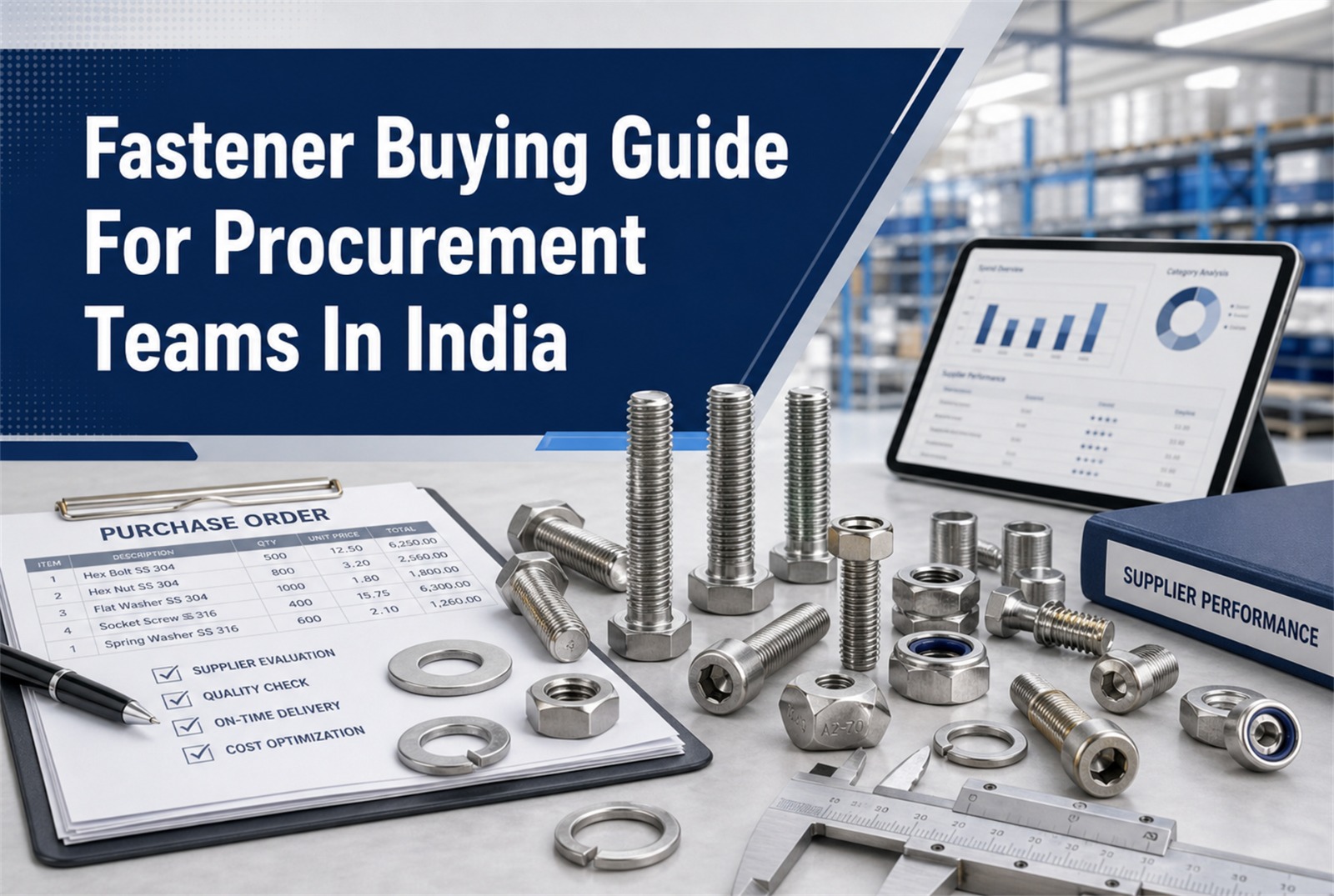
Fastener Buying Guide For Procurement Teams In India
Introduction
Fasteners may be small, but they are vital in manufacturing, construction, equipment, automotive, electrical, furniture, HVAC and many other industries. Procurement teams in India have to cope with numerous suppliers, urgent requirements, varying standards and volume purchases. This article discusses the main things customers should be aware of when purchasing industrial fasteners.
Understand The Application First
The first thing you need to do is establish where and how the fastener will be used. Fasteners used in furniture will not have the same demand as fasteners used in heavy machinery or outdoor construction.
Getting basic application data from the manufacturing, maintenance or engineering team before placing an order is useful. This helps to avoid the selection of improper material, grade or coating.
Choose The Right Type Of Fastener
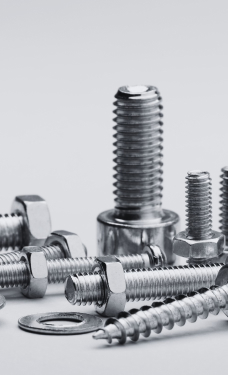
Different fasteners are for different uses. Hex bolts are used in manufacturing, equipment and construction. Socket head bolts are for short heads and strong fastening. Self-tapping screws are used when the fastener needs to create its own thread during installation. In metal sheet applications, self-drilling screws are used when the drilling and the fastening are merged.
Nuts, washers, rivets, studs, anchor fasteners and self-clinching fasteners are all used for unique reasons. Choosing the wrong kind might affect the quality of assembly and the time of installation.
Procurement teams should consult with the technical team to verify the kind of fastener to be used, particularly on new projects or critical assemblies, before purchasing fasteners.
Confirm Material Requirements
The choice of material influences strength, corrosion resistance, cost and service life. Common fastener materials include carbon steel, alloy steel, stainless steel and nylon. Stainless steel fasteners offer excellent corrosion resistance, while alloy and carbon steel fasteners provide high strength for industrial applications. Nylon fasteners are suitable for lightweight assemblies requiring electrical insulation or non-corrosive properties.
Select the Appropriate Grade
The strength of a fastener is reflected by its grade. Failure may occur if a lower grade than required is used. You can end up paying for a higher grade than you need. Procurement teams should validate the grade using drawings, technical specifications or engineering teams.
Coating and Surface Finish Review
Zinc-coated fasteners provide good corrosion resistance for a wide range of general industrial applications, while Black Oxide is primarily chosen where appearance and light corrosion protection are required.
Verify Fastener Dimensions and Standards
Check the fastener size carefully before you purchase it. Important features include diameter, length, thread pitch, head type, drive type, washer size and nut compatibility.
You could need a bolt like M8 x 40. But also you need to consider whether it is full thread or half thread, the required quality and the appropriate coating.
The specification of measures and standards are done using standards like DIN, ISO, IS, BS, JIS etc. Buying to the appropriate specification guarantees right-fitting, interchangeable parts.
Packaging & Quantity
Quantity planning is a must for mass buying of fasteners. If purchase is not enough, it may cause delay in manufacture. Over-stocking may tie up operating cash and storage space.
Before placing orders, buyers should evaluate monthly consumption, project need, lead time and safety stock level. For fast moving items, it is good to keep a limited stock level.
Packaging matters as well. Good packaging helps prevent mixing, corrosion, damage and counting errors. Packaged or boxed labels make small fasteners easier for inventory to manage.
Evaluate Supplier Reliability
For fasteners, it’s not only the product quality, but the supplier quality as well. A good supplier should have the proper material, consistent quality, deliver on time, nicely packaged and assist with technical options.
It is advisable to analyse suppliers based on product diversity, stock availability, delivery capabilities, documentation support, pricing consistency and timeliness of response.
For industrial buyers, if one supplier can provide a range of fastener types, it decreases the amount of coordination and allows for easier repeat purchasing.
Request Documentation As Necessary
For critical applications, purchasers should obtain documents such as material test certificates, coating certifications, dimensional reports or compliance papers. This paperwork is used to verify that the fastener meets the criteria mentioned.
Not all general-purpose fasteners will need paperwork; automotive, construction, equipment, infrastructure or export-related uses may require paperwork. Documentation also matters for quality audits and customer approvals.
Common Mistakes To Avoid When Buying
Common mistakes when buying fasteners include buying just on price, overlooking the grade, choosing the incorrect coating, ordering the wrong length, combining standards and not checking thread pitch. Such defects may seem little when bought, but pose a lot of problems during assembly.
Another common concern is the use of the same fastener for all applications without consideration of whether the environment or load condition has changed. Procurement teams should continuously reassess needs if there is a change in design, supplier or project necessity.
Build a Standard Fastener List
It is excellent practice to have a standard list of fasteners for repeat purchasing. This list might include item name, size, grade, material, coating, standard, authorised supplier, monthly consumption and reorder level.
A consistent list can help you avoid misunderstanding, speed up the purchase process and assist in preventing mistakes in ordering. It also helps in simple comparison of prices and managing stocks.
For a manufacturer, this might be on the bill of materials or approved vendor list.
Conclusion
It’s not as easy as picking an item from a catalogue when buying fasteners. Procurement teams should look at application, fastener type, material, grade, coating, size, standard, quantity, supplier reliability and documentation. The appropriate fastener choice may boost assembly strength, minimise maintenance and avoid costly failures.
For Indian manufacturers and industrial clients, working with a reliable fastener supplier may enhance confidence and ease the procurement process. A good supplier can help you pick products, ensure bulk availability and grade matching, aid with coating options and ensure timely delivery.
Fastener World (India) can help procurement teams choose the right product for their application for bulk requirements of bolts, nuts, screws, washers, anchors, rivets, studs, pins, socket head bolts, self-tapping screws, self-drilling screws and other industrial fasteners.