Blind Rivets vs Rivet Nuts: Choosing the Right Fastener for Thin Sheet Metal
Introduction
Thin sheet metal is lightweight and easy to fabricate, but it can be challenging to fasten securely.. The material is typically too thin to form strong threads or there may not be access from both sides . Standard nuts and bolts may not function effectively .
This is where blind rivet fasteners and rivet nuts may be handy. Both are good for thin sheet metal but are used for different reasons. A blind rivet is generally used for permanent connecting, a rivet nut makes a thread insert in thin material.
Blind rivets are rivets that are driven from one side of the assembly, but may be installed in the blind side of the assembly.
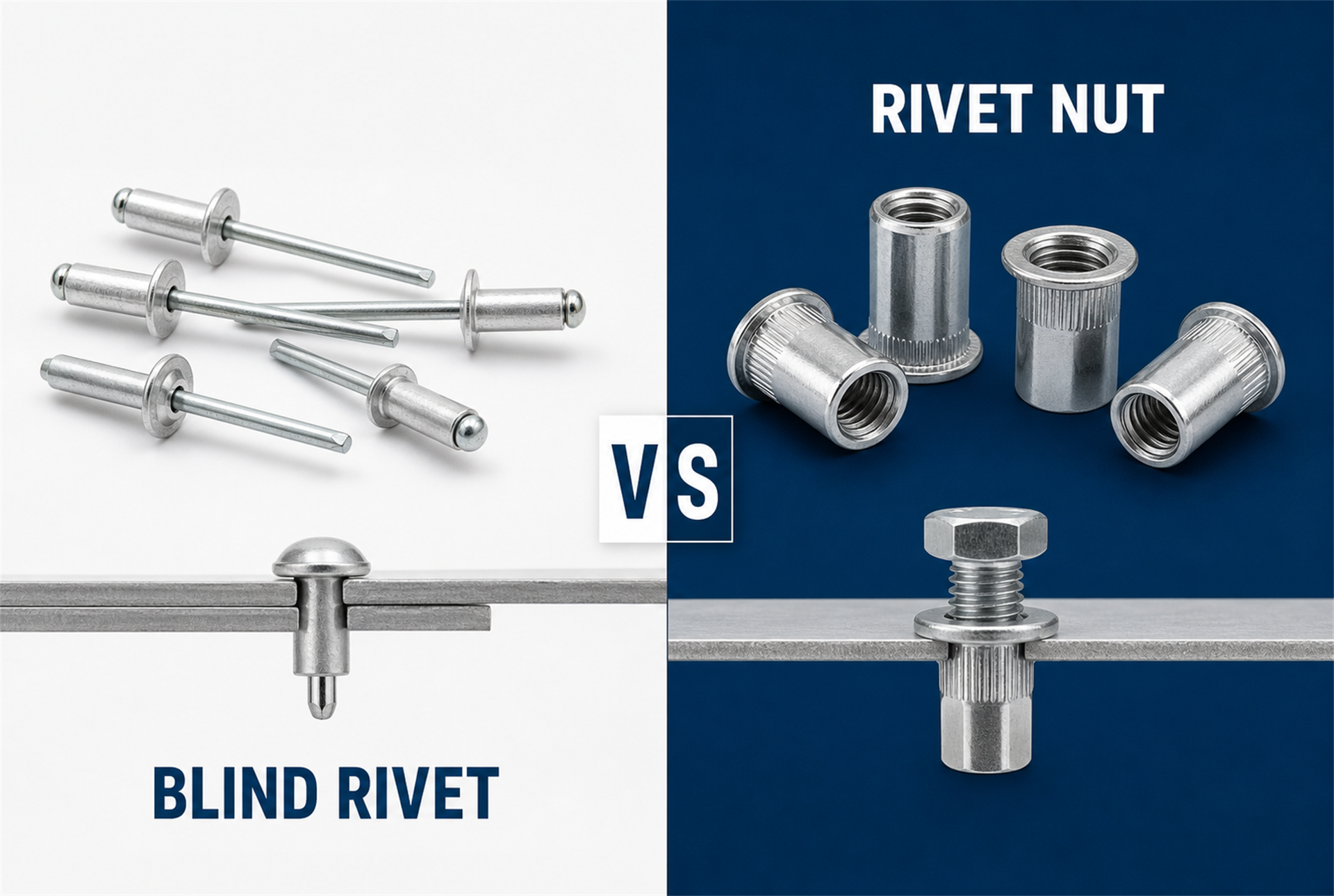
A blind rivet consists of a rivet body and a mandrel. The rivet is installed by inserting it into a drilled hole and pulling out the mandrel using a riveting tool. As the mandrel is pulled, the rivet body expands on the blind side and holds the material together. Once the requisite force is obtained the mandrel breaks away leaving the rivet in situ.
Blind rivets are a typical fastener for usage in sheet metal fabrication, ducting, panels, enclosures, automobile parts, furniture, and light industrial assembly. These are beneficial if a permanent joint is needed and rapid installation is necessary.
What Are Rivet Nuts?
Rivet nuts are threaded inserts for installing in thin sheet metal, tubes, panels or hollow parts. Once placed they form internal threads to receive a bolt or screw. This makes them handy in situations when the underlying material is too thin to tap directly.
A rivet nut is put into a drilled hole using a rivet nut tool . In the installation the body expands or contracts underneath the sheet, clutching the material tightly. Once installed, a bolt may be threaded into the rivet nut as needed.
Rivet nuts are often used in electrical cabinets, car bodywork, machinery panels, HVAC equipment, metal furniture and assemblies where parts may need to be removed and replaced during service.
Rivet Nuts vs. Blind Rivets: What’s the Difference?
The fundamental distinction between blind rivets and rivet nuts is their purpose. Blind rivets are used to permanently bind materials together. A rivet nut provides a reusable threaded point in thin material.
Blind rivets are often not removed until drilled out. They are great for permanent attachment when you don’t need to open the linked pieces regularly. Rivet nuts are more suited for serviceable assemblies, since bolts or screws may be taken out and replaced.
If you want to permanently link two sheets then a blind rivet is frequently a good choice. A rivet nut is typically your best pick if you want to secure a detachable element to thin sheet metal.
Force & Load Requirement
One of the big considerations when deciding between these two fasteners is strength. Blind rivets have strong gripping power for sheet metal connections and fit light to medium duty applications. The strength of these relies on the material, diameter, grip range and the sheets to be attached .
Rivet Nuts are ideal when a threaded mounting point is required in thin material.They allow bolts to securely fasten brackets, covers, frames and other components.
Blind rivets may be used for basic permanent connections. Rivet nuts are better ideal for threaded fixing and repetitive removal.
Removability & Maintenance
A crucial selection question is whether the assembly will be opened at a later stage. Blind rivets are permanent fasteners by nature. If a riveted panel has to be removed, the rivet normally has to be drilled out and replaced.
Rivet nuts are excellent for assemblies that need maintenance. After the rivet nut is inserted, bolts or screws may be withdrawn and tightened many times without harming the thin sheet metal. This is handy for covers, access panels, machine guards and electrical cabinets.
If frequent service is anticipated, rivet nuts provide greater flexibility than blind rivets.
Installation Instructions
Blind rivets are usually fast and easy to install. A hole is bored, the rivet put in and a riveting tool is used to pull the mandrel. This makes blind rivets beneficial for manufacturing situations.
Rivet nuts need a more regulated install technique. The hole size has to be right, the rivet nut has to be matched to the sheet thickness, and the tool has to collapse the body behind the sheet effectively. The rivet nut might spin, loosen or fail under stress if fitted improperly.
Material & Coating Options
Blind rivets and rivet nuts may be made from aluminium, steel, stainless steel and occasionally brass. Aluminium is light weight, steel has more strength and stainless steel is recommended when resistance to corrosion is of importance.
Zinc plated steel may be OK for regular indoor usage, while stainless steel or specially coated fasteners may be called for in more extreme situations.
Common Uses:
Blind rivets are a ubiquitous fastener used in sheet metal fabrication, HVAC ducting, electrical panels, automobile trim, signs and light enclosures. They are suitable for rapid and lasting fixing.
Rivet nuts are utilised in electrical cabinets, machine covers, vehicle panels, tubular constructions, HVAC equipment and access panels. They are for use when you want a threaded hole and you may want to remove the item later.
What Fastener to Use?
Choose a blind rivet if you want fast installation, access from one side and a permanent junction. Suitable for attaching sheets, panels and ducts where components are not to be removed often.
Use a rivet nut for a threaded insert in thin sheet metal. It is more suitable for situations where bolts or screws need to be withdrawn and replaced during maintenance or installation.
To summarise, blind rivets are better suited for permanent joining, whereas rivet nuts are more suited for detachable fastening.
Summary
Blind rivets and rivet nuts are both good fasteners for thin sheet metal, although they address distinct concerns. A blind rivet is a permanent joining of materials with access from one side only. Rivet nuts are threaded points in thin material that enable bolts and screws to be used again and over again.
The correct decision will depend on whether the junction has to be permanent or detachable, sheet thickness, access situation, material, coating and manner of installation.
Fastener World (India) helps consumers choose the proper size, material, finish and fastening solution for their application, including bulk blind rivets, rivet nuts and other industrial fasteners. The organization is one of the fasteners manufacturers in India and assists consumers with realistic fastening solutions.