Machine Screws vs Self-Tapping Screws: Key Differences and Applications
Introduction
A machine screw is normally used with a pre-tapped hole or nut. A self tapping screw is intended to tap its own thread when it is screwed into the material. This variation has an impact on the technique of installation, appropriateness for application, strength and reusability.
What Are Machine Screws?
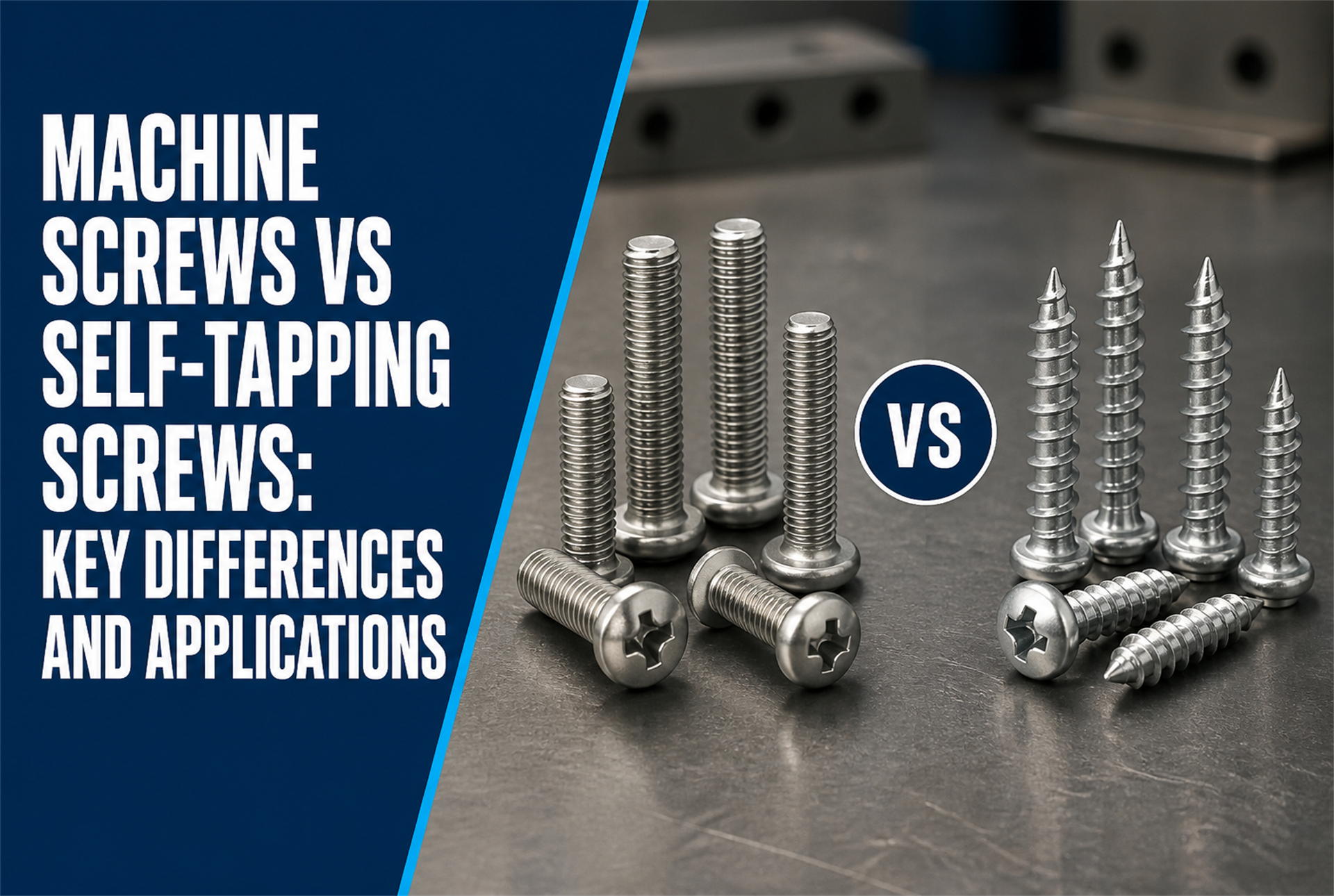
Machine screws are threaded fasteners that are utilized with a tapped hole, threaded insert or nut. They are generally of uniform thread and are intended for accurate attaching into metal, plastic or completed components. Self tapping screws usually make their own threads when installed . Machine screws do not usually make their own threads .
Machine screws are widely employed in machinery, electrical enclosures, control panels, appliances, instruments, automobile parts, equipment coverings and light engineering assemblies. They come in numerous head kinds including pan head, countersunk head, truss head and round head.
The big plus of machine screws is their precision. When used with a correctly matched tapped hole, threaded insert or nut, machine screws provide consistent and reliable fastening.
Learn what machine screws are, how they work, and where they are used. This guide explains machine screw types, materials, sizes, and applications to help you choose the right fastener for your project.
Difference Between Machine Screws and Self Tapping Screws
The distinction between machine screws and self tapping screws is that they interact differently with the material. Self tapping screws are superior if speedy installation is desired and the material can support thread creation.
Machine screws are often a good choice if the application involves a tapped hole or a nut. If the application is sheet metal or plastic without internal threads, self tapping screws may be preferable.
Thread Design and Holding Power
Machine screws are often made with a uniform machine thread that will fit a nut or tapped hole. Precise mating thread guaranties dependable holding force and easy tightening in the joint.
Self tapping screws feature threads that are sharper or uniquely engineered to tap threads in the base material. Their holding strength relies on material thickness, hole size, screw diameter, thread design and installation quality .
For thicker metal or precise equipment, machine screws may provide higher repeatability. Self tapping screws provide a practical and rapid method for fixing to thin sheet metal or plastic.
Installation Instructions
Machine screws need a threaded mate. This might be a nut, tapped hole or threaded insert. The hole preparation should be correct particularly in machinery or equipment assemblies where the alignment is important.
Self tapping screws might save time since no separate tapping is needed. However, they should be placed with care to prevent excessive tightening, stripping threads or cracking the material.
Maintenance and Reusability
For applications requiring frequent removal and reassembly, machine screws are usually the preferable choice. They have a correct internal thread , thus they can typically be withdrawn and reinstalled without harming the joint if the threads are still in excellent shape .
Repeated removal of self tapping screws may result in loss of holding strength, particularly in thin sheet metal or plastic. This removal and reinstallation process may cause wear of the produced threads in the base material.
If a panel, cover or component is subject to regular maintenance, machine screws with threaded inserts or nuts could be more dependable. If you don’t plan to open the assembly frequently, self tapping screws might be the way to go.
Material Appropriateness
Machine screws are widely utilized with metal parts, threaded inserts, nuts, and precision parts. They may also be utilized in plastic or composite systems, if a threaded insert is available.
Usually self tapping screws may require a pilot hole based on the screw design and base material. If the hole is too tiny, the screw will be difficult to install or the material may be damaged. If the hole is too big, the screw could not bite well. Self tapping screws are often utilized in sheet metal, aluminum, plastic and other softer materials. These are suitable if the foundation material will take a produced thread without breaking or deformation.
Very thin material may not offer adequate thread engagement for a solid grasp. In some circumstances, rivet nuts, inserts or machine screws and nuts may be preferable.
Types of Heads and Drives
Machine screws and self tapping screws come in several sorts of heads and types of drive. Common head types include pan head, countersunk head, truss head, flange head and hex head. Drives are often either Phillips, slotted or hex socket.
The head and drive should be chosen on appearance, tool access, tightening demand and surface condition.
What Screw Should You Choose?
If the application has a tapped hole, threaded insert or nut, use machine screws. They are suitable for precise assembly, serviceable components and applications needing recurrent removal.
If the application is in sheet metal, plastic or other softer material where the screw may form its own thread then go for self tapping screws. They lend themselves well to rapid setup and not often opened apps.
Buyers should look at the screw diameter, length, type of thread, head type, drive style, material, coating, pilot hole size and application load before making a choice between the two.
Summary
Machine screws and self tapping screws are both effective industrial fasteners , however they are intended for distinct circumstances of fastening . Machine screws must have the same thread and are used in precise, reusable and precision assembly. Self tapping screws tap their own thread and are handy for quick installation in sheet metal, plastic and light construction.
The proper option relies upon the material, thread requirement, installation technique, if it is reusable, strength and maintenance demands. Fastener World (India) can assist purchasers choose the proper size, material, coating and specification for bulk needs of machine screws, self tapping screws and other industrial fasteners. The organization is one of the recognized fasteners manufacturers in India, and helps the consumers with practical fastening solutions.