What Are HSFG Bolts? Uses, Grades and Selection Guide
Introduction
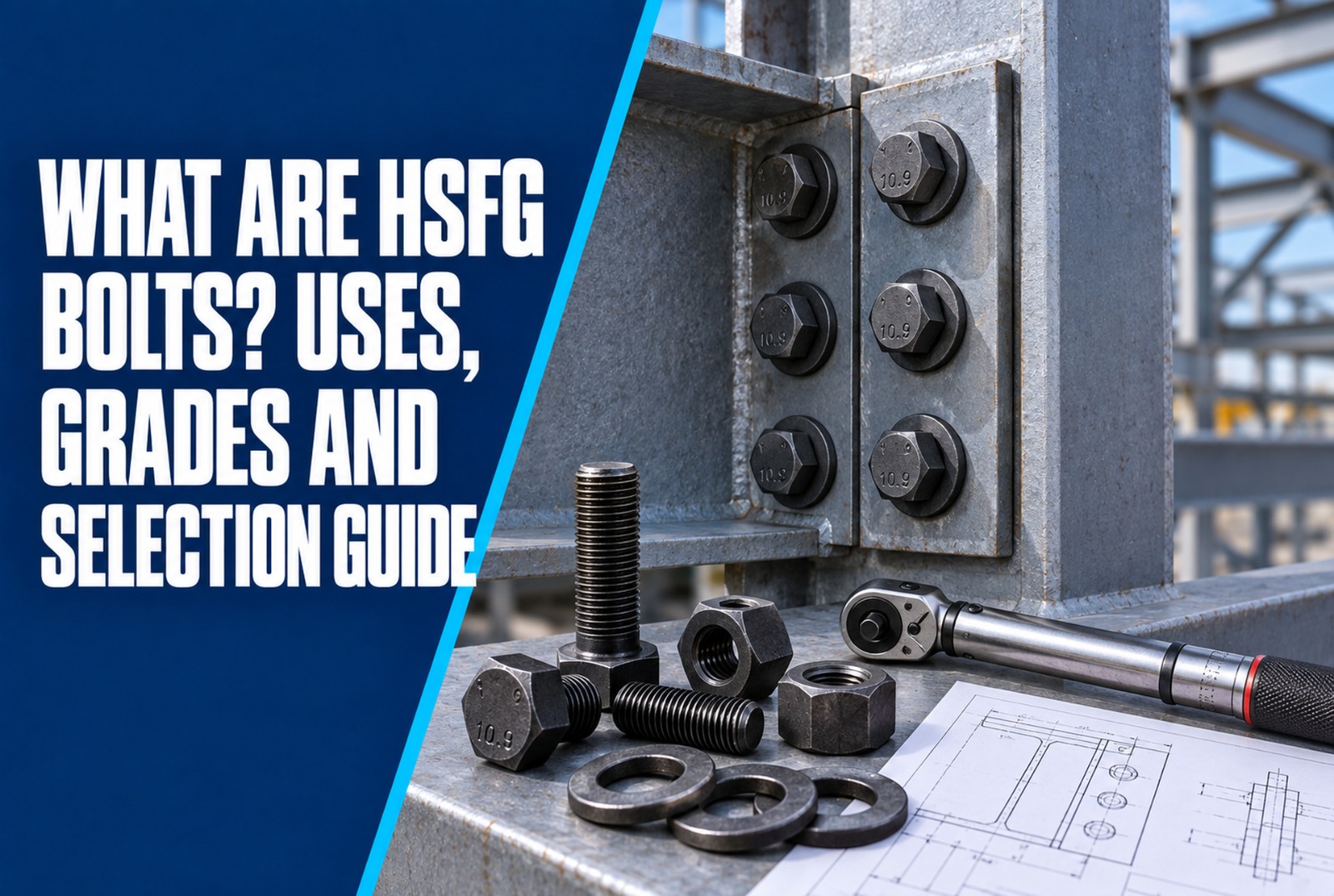
HSFG bolts are utilized when robust, dependable and slip resistant couplings are required. HSFG is High Strength Friction Grip. These bolts are utilized widely in Steel Structures, Bridges, Industrial Sheds, Towers, Fabrication, Cranes, Railroad Structures and Load Bearing Assemblies.
HSFG bolts are different from regular bolts in that they are intended to provide a strong clamping force between the linked plates. This clamping force generates friction between the surfaces, which helps the joint resist slipping under load. This is why HSFG bolts are recommended when movement, vibration or repetitive loading has to be controlled.
If you are a buyer shopping from fasteners manufacturers in India, or dealing with a regular fastener provider, it is crucial to grasp HSFG bolts, their grades, installation technique and selection variables before ordering.
What are HSFG Bolts?
HSFG bolts means high strength friction grip bolts. HSFG bolts are utilized in high strength structures. In these connections the stress is taken up mostly by friction between the joined plates and not by the bolt bearing on the hole.
When an HSFG bolt is appropriately torqued the bolt is put under tension and squeezes the plates together. The clamping force serves to avoid slide between the items being joined. The bolt, surface condition, the use of washers, the tightening technique and the quality of installation all affect the joint performance.
The HSFG bolts are provided with matching nuts and hardened washers. Used when regulated tightening and dependable joint performance are needed.
How do HSFG Bolts Function
The fundamental objective of an HSFG bolt is to induce friction between two or more linked plates. Tighten the bolt to the desired preload to clamp the plates firmly together. The pressure produces friction that opposes the sliding of the plates.
For the common form of bearing in a bolted joint, load may be transmitted when the bolt shank meets the side of the hole. The objective of an HSFG joint is to avoid this slide. This makes HSFG bolts helpful in situations where slight movement may impact alignment, fatigue life or safety.
Proper tightness is important. If the bolt is not tight enough, the joint may not create sufficient friction. Over tightening might harm the bolt or threads.
Typical uses of HSFG Bolts
The usage of HSFG bolts is common when working with structural steel. You may find them in bridges, steel buildings, industrial warehouses, power plants, towers, cranes, railroad constructions, metro projects and foundations for heavy equipment.
They are also employed where vibration, dynamic loading or fatigue resistance is necessary. High strength bolts which can maintain joint stability may be required for crane girders, conveyor supports, large platforms and equipment frames.
HSFG bolts are used for infrastructure and transport projects due to their ability to prevent slide and increase connection dependability. They are commonly defined by engineers in drawings, structural design or project requirements.
Standards and Grade
Depending on the application, HSFG bolts are available in various strength ratings and specifications. Common high strength bolt grades are 8.8 and 10.9, however the actual grade must always be to project specification.
The grade signifies the bolt’s mechanical strength. Usually the greater the grade the higher the tensile strength and yield strength. But don’t assume that the highest grade is always the best choice. The right grade is dictated by the design load, type of joint, material thickness and technical necessity.
HSFG bolts may be made to Indian or international specifications. Buyers should specify standard, size, length, thread, grade, finish and number when ordering. If test certifications are required for the project this should be verified at time of purchase.
Nuts and Washers, Hardened
HSFG bolts are often utilized with hardened washers and appropriate high strength nuts. The washer distributes the pressure and protects the contacted area during the tightening. It also helps in developing optimal preload.
Common washers or mismatched nuts might degrade joint performance. If the nut or washer is not hard enough it may be deformed when you tighten it. This may lessen the clamping force and influence the frictional grip of the joint.
Wherever practicable, buyers should obtain HSFG bolts as a complete assembly. This contains bolts, nuts and washers to the relevant grade and standard.
Slip Resistance and Surface Treatment
In HSFG joints, surface condition is highly essential. Because the joint relies on friction between plates, paint, oil, grease, dust or loose scale may impair slip resistance. Contact surfaces should be prepared as per project need.
Even a correctly designed HSFG bolt may not work as intended if the surfaces are not adequately prepped. These factors together provide dependable performance of the bolt, washer, nut, surface condition and tightening procedure.
Installation/Tightening
HSFG bolts should be tightened thoroughly in the specified way. Depending on project demand, tightening may be achieved via torque control, turn-of-nut technique, direct tension indicators or calibrated equipment.
The idea is to get the right preload in the bolt. If you over-tighten, you may damage the bolt or limit the safety margin; if you under-tighten, the bolt might slide. During installation, workers should utilize clean threads, right washers and adequate equipment.
Coating and Corrosion Control
HSFG bolts may be utilized inside or outdoors or in exposed structural areas. The finish may be black or plain in controlled interior conditions but hot dip galvanizing or other protective coatings may be necessary for outdoor usage.
Corrosion may lead to reduction of bolt strength and compromise long-term dependability. Buyers in coastal, chemical or high-moisture environments should consult with the fastener supplier about coating needs before buying.
Thread fit may be affected by coating thickness. Nuts and washers should have compatible finishes.
Checklist to Buy
Buyers should check bolt size, length, thread, grade, standard, coating, nut type, washer type and number before buying HSFG bolts. They also have to verify whether the bolts are for structural steel, bridge construction, railroad, metro, equipment or heavy fabrication.
Why Application Details Matter ? HSFG Bolts Used in Critical Joints . The buyer must not alter grade, coating or washer type without consent of the engineer or project requirements.
A good fastener supplier can assist in matching the product to the design or application. Experienced fasteners manufacturers in India can also assist bulk needs, paperwork, test certifications and project based supply.
Conclusion
HSFG bolts are high strength fasteners that are employed when slip resistance, clamping force and structural dependability are critical. They function by controlled tightening which creates friction between linked plates.
They are utilized extensively in bridges, steel buildings, industrial sheds, cranes, railroad projects, metro projects, towers and heavy fabrication works. Correct performance relies on bolt grade, nut, hardened washer, surface preparation, coating and technique of installation.
Buyers should check the whole specification before purchase instead than picking by size simply. Fastener World (India) can assist your needs for HSFG bolts, high strength bolts and other industrial fasteners depending on application, grade, standard, coating and quantity requirements.