Chipboard Screws vs Gypsum Screws: Design, Uses & Applications
Fasteners are important because they hold things together tightly and make sure they operate right over time. Most screws seem the same at first, however their design is generally created for certain materials and functions.
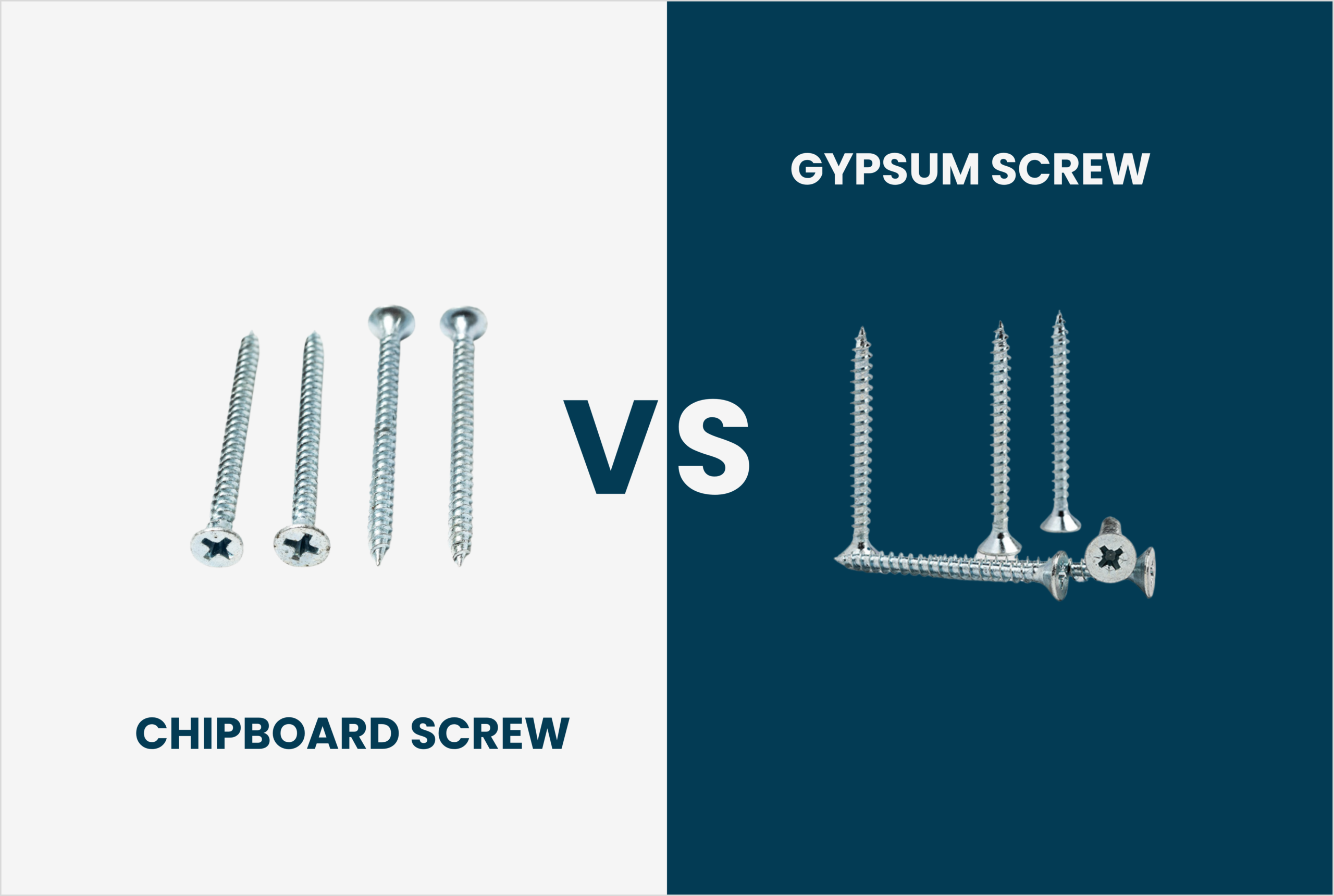
Chipboard screws and gypsum screws are two commonly used fasteners in woodworking and interior applications. Both are designed for relatively soft materials, yet they serve different purposes and behave differently depending on the substrate. Chipboard screws are widely used in wood-based materials such as particle board, MDF, and plywood, whereas gypsum screws are primarily used for fixing drywall sheets to metal or wooden frames.
Chipboard Screw
A chipboard screw is a special kind of fastener that is mostly used to join wood-based materials like chipboard, particle board, MDF, and other manufactured wood goods. A lot of people use these screws to make furniture, do building work, install interior trim, and do other DIY tasks. Their design is based on giving a strong grip, keeping the material from breaking, and making sure that they will hold strong for a long time in buildings made of soft or mixed wood.
The sharp, coarse thread is one of the things that makes a wood screw unique. This pattern of threads is designed to cut deep into wood fibres and make a strong mechanical grip. Chipboard screws, on the other hand, usually have a double-thread or deep-thread design that makes them easier to put and stronger when they’re in place. In products that don’t naturally have grain strength, like particle boards, this makes them very useful.
A chipboard screw’s tip is generally sharp and can tap itself. In general, they shouldn’t be used in harsh weather conditions without extra safety, but they work absolutely great inside. The countersunk head shape of chipboard screws is another important thing to note. Because they hold tightly in particle board, they are perfect for goods that are already put together. Besides that, they’re used to make office furniture, closet doors, racks and kitchen cabinets. Chipboard screws are made to spread pressure widely and lower the risk of damage because engineered wood materials tend to break down or split. One great thing about chipboard screws is that they hold things together well in low-density materials. Because particle boards have a weak internal structure, traditional screws may come loose over time.
Gypsum Screw
The threads are meant to provide you a good grip without breaking or cracking the gypsum board. Most gypsum screws are made of steel that has been strengthened and then covered with black phosphate or another finish that resists rust. The black finish helps keep things from rubbing together during installation and protects against rust in indoor settings. Extreme rust protection is not usually needed for plasterboard because it is mostly used inside. Another benefit is that installation is quick. Electric screwdrivers or plasterboard screw guns can be used to quickly drive gypsum screws into the wall. Their fine threading makes it easy for them to go through frame materials with little pushback. Because of this, they work very well on big building jobs where speed is important.
However, gypsum screws have certain limitations. They are not suitable for applications requiring high load-bearing capacity. Overdriving, which is when the screw head breaks through the plasterboard, is another problem that can happen with bad fitting. This could lessen the hold and need to be fixed. Controlled force is important during placement because of this. Also, gypsum screws can only be used inside. Even though they can prevent rust to some extent, they are not meant to be used outside or in places with a lot of wetness unless specially treated models are used.
Even with these problems, gypsum screws are still necessary for modern buildings. Their precise design makes sure that plasterboard systems are installed safely, cleanly and quickly. This is why they are used in all household and business building projects. Gypsum screws are a specific type of fasteners that can be used in plasterboard uses. The main goals of their design are to protect the surface, make placement easy, and provide solid binding power in non-structural wall systems. They are still an important part of getting smooth, long-lasting interior finishes in buildings.
Key Differences
| Aspect | Chipboard Screw | Gypsum Screw |
| Primary Use | Wood based materials like chipboard, MDF and plywood | Fixing gypsum boards to metal or wooden frames |
| Thread Design | Deep, coarse threads for strong grip in wood | Fine or coarse threads depending on metal or wood application |
| Material Compatibility | Engineered wood and softwood | Drywall |
| Head Type | Typically countersunk for flush finish | Bugle head for controlled penetration into drywall |
| Load Capacity | Moderate holding strength in wood applications | Designed for lightweight fixing, not load-bearing |
| Installation | Easy installation, often without pre-drilling | Quick installation with minimal surface damage |
| Surface Finish | Various coatings depending on application | Usually black phosphate for indoor use |
Conclusion
The kind of material and the type of job will determine whether you should use chipboard screws or gypsum screws. Chipboard screws are great for wood-based products that need a firm grip and may be used in a lot of different ways. Their deep threads and easy installation make them great for carpentry, furniture, and cabinets.
On the other hand, gypsum screws are made just for plasterboard systems. With their thread pattern and bugle head, they guarantee that gypsum boards are firmly fastened without damaging the surface. They may not be able to hold a lot of weight, but they are quite good for holding things in place in big areas within buildings.
Both screws have different uses, and utilising the right one will make your work last longer, look better, and work better. We have a lot of various sizes and finishes of chipboard screws and gypsum screws at Fastener World (India) to fit the demands of different projects. Choosing the appropriate fastener may greatly improve the dependability and efficiency of your project.