A Complete Guide to Stainless Steel Fasteners
Fasteners have a broad variety of applications in many sectors to attach pieces securely and maintain the stability of buildings over time. Fasteners may be made from numerous materials, however stainless steel fasteners are special because they are durable and corrosion resistant. Stainless steel fasteners are typically made from iron-based alloys containing chromium and other alloying elements. What sets stainless steel apart is its corrosion resistance due to the presence of chromium. When chromium is exposed to oxygen, it develops a protective oxide coating on the surface which inhibits further oxidation and protects the inside metal from harm. This natural protective system is self-renewing, so if the surface is scraped or exposed to severe circumstances, it may be regenerated.
In damp settings the value of stainless steel fasteners as opposed to salt or chemicals is much greater. This makes them appropriate for high load applications including bridges, buildings, equipment and transit systems. They are strong, i.e. the linked components are securely attached even when subjected to vibration, pressure or dynamic movement.
Another essential aspect is the temperature resistance. Some materials become weak when heated or brittle when cooled. Stainless steel, however, may be used throughout a broad range of temperatures.
Another key factor is the efficiency of maintenance. Stainless steel fasteners are corrosion resistant and need less maintenance than treated or coated fasteners. Coated fasteners generally rely on their surface coatings for protection, but these layers may be worn away, leaving the underlying metal vulnerable to harm. Stainless Steel removes this reliance, giving extended life durability at lower maintenance costs.
Key Features of Stainless Steel Fasteners
One of the most important properties of stainless steel fasteners is corrosion resistance. This is due to the chromium in the material which forms a thin protective layer on the surface. This layer prevents moisture and oxygen accessing the metal and minimises the danger of corrosion. It may form this protective coating even when scraped, offering some continuing robustness. Careful installation may also be necessary to avoid galling difficulties, especially in threaded applications. Besides such problems, they can provide excellent value over the long haul.
Another desirable feature is heat resistance. The stainless steel fasteners can work effectively in a high and low temperature environment without losing its mechanical qualities. They are suited for use in applications such as engines, boilers and industrial equipment where there are frequent temperature variations. Their heat stability allows reliable operation, even under difficult working circumstances.
Stainless steel fasteners also provide good resistance to chemicals. Resistant to contact with different chemicals, acids and alkaline substances without substantial deterioration. Their resistance to such conditions makes them perfect for use in chemical factories, food processing units and the marine environment where exposure to harsh chemicals is common. Galling is something which is a concern during installation, particularly with threaded fasteners . Galling is when there is so much friction that the threads freeze or bind up . This makes it harder to tighten or loosen. Proper lubrication and torque control can minimise galling during installation.
Stainless Steel Fastener Grades and Types
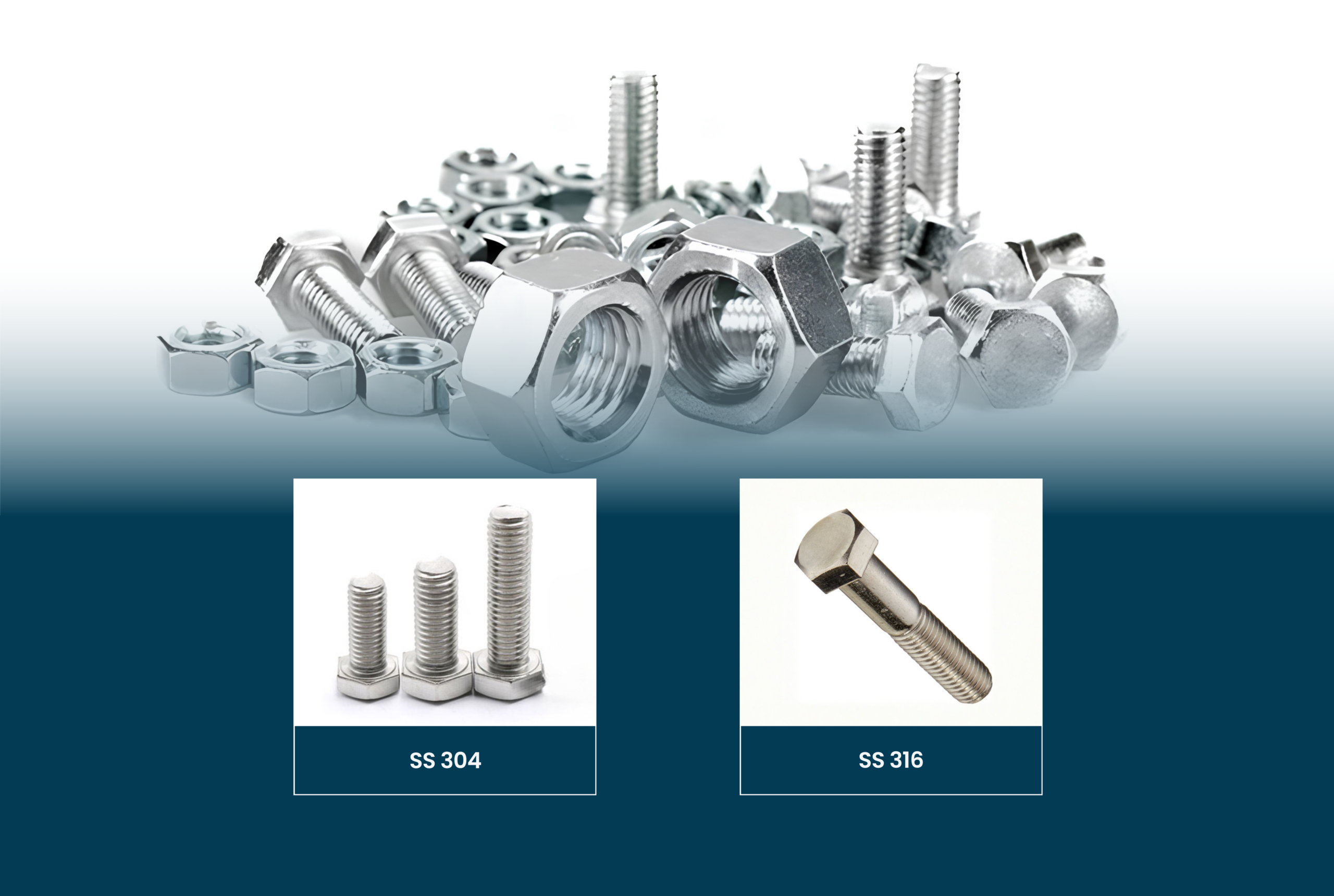
There are several grades of stainless steel fasteners for different uses. The grades primarily utilised are SS 202, SS 304 and SS 316. SS 202 is less costly and is utilised in situations where moderate corrosion resistance is adequate. It works well in most outdoor locations, but is not appropriate for extreme corrosive situations.
SS 316 has the best corrosion resistance of all regular grades. Other components are included to make it usable in difficult settings including maritime applications, coastal locations and chemical processing industries. Salt water and chemical exposure applications often employ SS 316 fasteners.
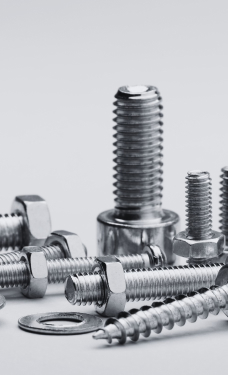
Stainless steel fasteners are supplied in various varieties, such as bolts, screws, nuts, washers and threaded rods. Available in various sizes, thread styles and head styles, these fasteners are suitable for a range of applications. The kind of choosing relies on load requirements, manner of installation and of the materials being linked.
Applications of Stainless Steel Fasteners
Stainless Steel Fasteners are employed in a variety of sectors owing to their adaptability and effectiveness. They are often employed in construction for constructions that are exposed to the elements, such as railings, bridges and building exteriors. They are corrosion resistant so the structure stays stable over a period of time with no upkeep.
Stainless steel fasteners are used in car parts where durability and resistance to environmental exposure are necessary. They are often employed in locations with dampness, heat and vibration.
Stainless steel fasteners, particularly SS 316, are important in marine environments since they can tolerate exposure to seawater. Besides, stainless steel fasteners are heavily employed in electrical and electronic applications, furniture production and infrastructure projects. They may be used functionally or structurally since they can keep strength and withstand wear.
But you need to choose the proper grade and type for your application. A lower-grade fastener in a highly corrosive environment may lead to failure whereas a higher-grade fastener where it is not needed may add expenses needlessly.
Conclusion
For many applications, stainless steel fasteners are a good choice because they provide strength, durability and corrosion resistance. Because of this they are an excellent alternative for sectors that need to keep working for a long period of time and don’t want to do a lot of maintenance work.
The climate, load requirements and the application dictate the suitable stainless steel fastener. The grades SS 202, SS 304 and SS 316 are available at various performance levels so that the customer may pick the one which is best suitable for his requirements.
Stainless steel fasteners may cost more initially than regular fasteners, but the long-term advantages may justify the expenditure. They contribute to the overall efficiency and dependability of installations, by decreasing the need for regular replacements and maintenance.
Fastener World (India) provides a complete solution for all your fastener needs by offering a large choice of stainless steel fasteners in different grades, sizes and kinds. Choosing the appropriate fastener may make all the difference in the safety, longevity and success of any project.