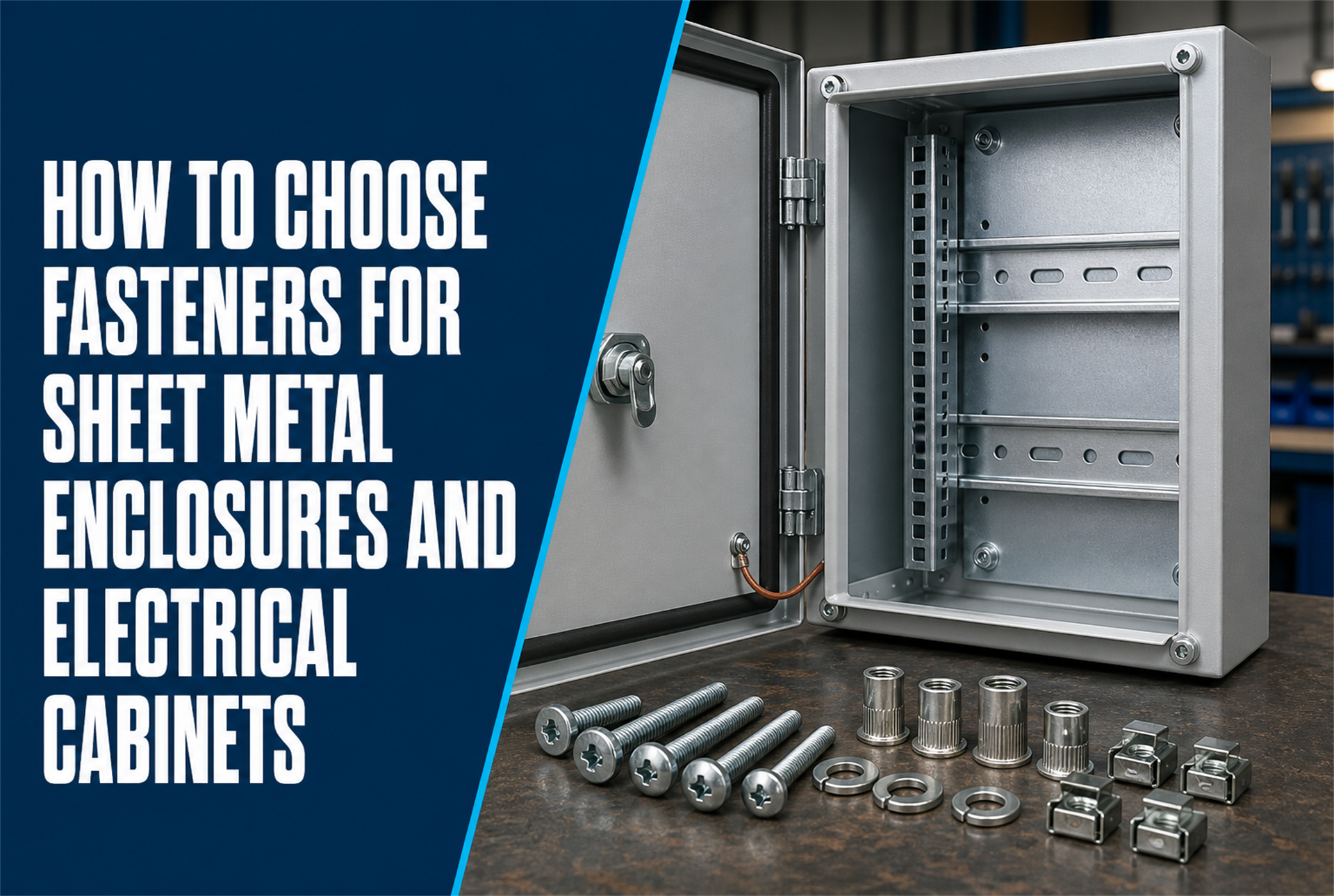
How to Choose Fasteners for Sheet Metal Enclosures and Electrical Cabinets
Introduction
Control panels, switchgear, automation systems, telecom boxes, machine covers, distribution boards and industrial equipment employ sheet metal enclosures and electrical cabinets. The assemblies need a solid fastening to secure the internal components, to maintain the alignment and to provide safe access during maintenance.
Sheet metal is typically quite thin and may not give adequate depth of thread for ordinary screws or bolts. This is why it is crucial to choose the proper sheet metal fasteners. Fasteners for electrical cabinets also have to resist vibration, repetitive opening, exposure to corrosion, and speed of installation.
Understand Sheet Metal Thickness
First, make sure of the thickness of the sheet metal. If used directly, a conventional screw may not retain threads adequately in thin sheets. If the sheet is excessively thin, the threads might easily strip while tightening or after frequent usage.
For extremely thin sheet metal, self tapping screws, rivet nuts, clinch nuts or threaded inserts could be preferable choices. These fasteners provide increased thread engagement and enhance assembly dependability.
Thicker sheet metal could permit tapping, but the hole preparation would need to be precise. Check sheet thickness before choosing screw size, thread type or insert style.
Select the Right Fastener Type
Different enclosures and cabinet designs require different fasteners. Machine screws are beneficial when there are already tapped holes, inserts or nuts. They are good for covers, hinges, brackets and other components.
Self tapping screws are handy if speedy installation is needed and the screw may establish its own thread in the sheet. They are often utilized in light sheet metal and general cabinet construction.
Rivet nuts are useful when you require a robust threaded point in thin sheet metal. They enable bolts or screws to be taken out and replaced during maintenance. Clinch nuts and self clinching fasteners are also beneficial if a permanent threaded point is needed.
Blind rivets may be used for permanent connecting. Screws with inserts or rivet nuts are often preferable for panels that need to be removed.
Verify Accessibility from Both Sides
Access is a big issue with sheet metal assemblies. In certain cabinets there is access to the back side of the panel by the installation. In other cases, access may be accessible on just one side after the enclosure is created or placed.
Maintainability and Reusability
Electrical cabinets are often opened for inspections, wiring modifications, repairs, or replacement of components. If a panel is to be removed repeatedly, the fastening must be suitable for repeated usage.
Machine screws with tapped holes are suitable for serviceable parts. Rivet nuts, clinch nuts or threaded inserts. They are a better thread than screws simply driven into thin sheet metal.
Self tapping screws are okay for panels not opened frequently, but they might lose their grip after repeated removal. Each reinstallation wears the created thread in the sheet.
Load and Retention Strength
The strength of the fastener should be in proportion to the weight of the item being fastened and the function being performed. A tiny cover plate does not need the same level of fastening strength as a hefty door, hinge, mounting bracket or interior electrical component.
For light coverings and guards tiny machine screws or self tapping screws may suffice. Stronger fastening points may be needed for hinges, locks, brackets or mounting plates, e.g. rivet nuts, clinch nuts or bolts with nuts.
Vibration also must be addressed. Cabinets that are mounted close to equipment, motors, pumps or vehicles may be subject to repetitive movement. In certain circumstances, lock washers, flange nuts, Nylock nuts, or thread-locking techniques may aid to prevent loosening.
Materials and Coatings Selection
Fasteners for sheet metal enclosures should be chosen for environment and exposure to corrosion. Fasteners of mild steel may be used for interior dry cabinets. Zinc coated fasteners provide minimal corrosion protection and are used in typical electrical cabinet installations.
Stainless steel fasteners are the fastener of choice for outdoor cabinets, humid situations, chemical environments, food processing facilities and corrosion prone applications. SS 304 is good for many general corrosion resistant usage, SS 316 is excellent for coastal or chemical exposure.
Fastener coating should also be suitable with the cabinet material and finish. Poor choice of coatings might lead to corrosion, discoloration or difficult removal while maintenance.
Grounding and Electrical Considerations
Electrical cabinets may need adequate grounding or bonding of metal parts. In these circumstances the material of the fastener itself, its coating and the contact surface are important. Painted or powder coated surfaces decrease metal to metal contact unless adequate grounding washers or bonding procedures are applied.
Fasteners inside cabinets should not produce sharp edges, loose metal particles or interfere with wiring.
Appearance and Production Requirements
Appearance might also be important, as many electrical cabinets and enclosures will be visible after installation. Countersunk screws are handy when you need a flat surface. Truss head or pan head screws are handy when you want a bigger bearing surface.
Installation speed is critical in production situations. Self-tapping screws, self-clinching fasteners and pre-installed inserts may cut down on the time needed for installation. Rivet nuts and clinch nuts add an extra step, but they increase reusability and thread strength.
What Fastener Are You Using?
If the panel is not removed often, use self tapping screws for easy installation in light sheet metal. Use machine screws when you have a tapped hole, nut or insert available. If you require a strong reusable threaded point in thin sheet metal, go for rivet nuts or clinch nuts.
Blind rivets are used for permanent connecting when the rivet is not to be removed. Choose stainless steel fasteners for outdoor or exposed-to-corrosion cabinets. Use locking fasteners when vibration is likely.
Buyers should verify sheet thickness, hole size, fastener diameter, length, head type, material, coating, access condition and maintenance required before purchase.
Summary
Selecting fasteners for sheet metal enclosures and electrical cabinets is more than just a matter of screw size. Sheet thickness, access, load, reusability, corrosion exposure, grounding, appearance and installation technique are all factors that buyers should consider.
Correctly selected fastener suppliers for electrical cabinets increase holding strength, serviceability and long term performance. Fastener World (India) can enable purchasers to find the proper size, material, finish and specification for bulk needs of sheet metal fasteners, electrical cabinet fasteners and other industrial fasteners. A fastener provider also may provide specialized fastening solutions for cabinet and enclosure applications.