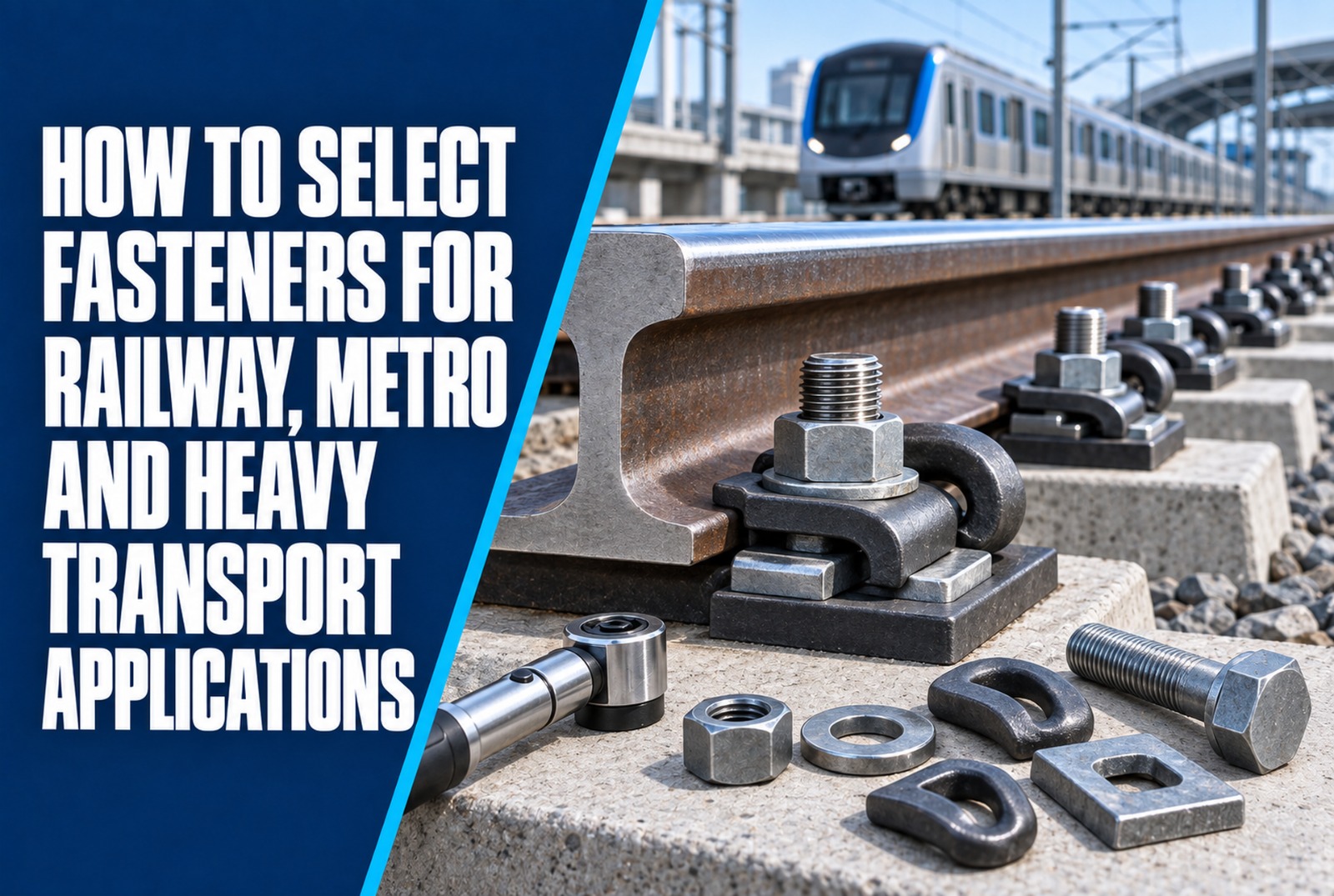
How to Select Fasteners for Railway, Metro and Heavy Transport Applications
Introduction
Fasteners are crucial for safety, stability and long-term performance of railroad, metro and heavy transport systems. Such applications include coaches, wagons, bogies, brake systems, electrical panels, trackside equipment, station structures, bus bodies and heavy vehicle assemblies.
Transport fasteners are not like applications in general where they may be picked by size alone. They have to be selected for their strength, grade, coating, locking need, installation condition and maintenance demands. Loose or rusted fasteners may compromise machine alignment, generate noise, increase downtime, or cause a safety hazard.
For buyers dealing with fasteners manufacturers in India or buying via a normal fastener supplier, knowing the primary selection variables helps to choose the proper fasteners for railroad, metro and heavy transport projects.
Why Choosing the Right Fastener is Critical in Transportation
Railroad and transport applications are exposed to continual vibration, dynamic load and outside conditions. Trains, metro coaches, busses and trucks operate over lengthy hours, typically under varying temperature, dust, moisture and impact conditions. These stresses may loosen bad joints or ruin poor quality fasteners.
Transport fasteners must support safety and serviceability as well. Many assemblies have to be examined, removed and replaced during maintenance. Using the improper fastener may tear threads, round off heads or reduce the gripping force on the joint.
The price of failure is steep. A simple fastener problem may hold up repair work, impair vehicle availability or cause danger in a vital assembly. Therefore, product quality, precise specification and dependable sourcing are particularly crucial.
Fasteners Commonly Used in Railroad and Metro Applications
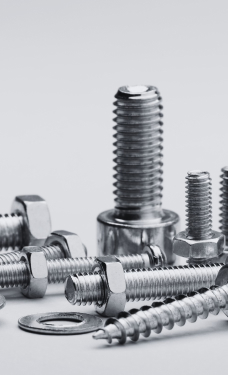
Fasteners are required for various areas of railroad and metro systems. Structural assemblies, brackets, base frames and support systems use hex bolts, high tensile bolts and nuts. Socket head cap screws are ideal for tight applications where more strength is required.
When tightening, washers serve to spread the load and protect surfaces. For resistance to vibration, spring washers, lock nuts and all-metal lock nuts may be used. Self-clinching fasteners and rivet nuts are helpful in sheet metal panels, electrical boxes, and interior assemblies where access is restricted.
Anchor fasteners are used to secure track-side equipment, platform structures, railings, signs, machinery bases and station support systems into concrete. The selection of fastener type to be used should be dependent on load, material and operating environment.
Strength Grade and Load Factors
Strength grade is one of the most crucial criteria for selection. Heavy transport applications generally demand high tensile fasteners since the joints might be subjected to vibration, shear stress, tensile load and shock load.
Depending on the design requirement, structural or load bearing sections may need higher grades of bolts, such as 8.8, 10.9 or 12.9. Lower grade fasteners may be used for light coverings or non-critical panels but must not be used in high duty joints without clearance.
Buyers should always examine the design, specification or technical need before making a purchase. If the grade is not obvious, check it before replacing. Using a lower strength fastener in lieu of the required high tensile fastener might affect the dependability of the connection.
Vibration And The Loosening Control
Vibration is a serious issue in railroad, metro and heavy truck applications. Engines, motors, rails, road impact and braking forces allow the joint to move repeatedly. Over time this might work loose conventional nuts and bolts.
Buyers may look at lock nuts, all-metal lock nuts, Nylock nuts, spring washers, serrated washers or thread-locking compounds to help limit loosening. The proper selection relies on temperature, access, servicing demand and vibration level
In certain cases for high temperature or severe load situations, all-metal lock nuts are chosen to nylon insert nuts. Investigation of reusable locking techniques should be made for assemblies requiring frequent maintenance. Correct tightening tension is also vital, since locking fasteners can’t compensate for a bad installation.
Selection of Material and Coating
Transport fasteners are subjected to external weather, moisture, dust, oil, grease and cleaning agents . Corrosion resistance is much more critical in coastal or wet environments.
Zinc coated fasteners are suited for indoor or light exposure applications. Hot dip galvanized fasteners are excellent for exterior constructions, brackets, track side assemblies and exposed supports. Stainless steel fasteners may be used for corrosion-prone locations, electrical panels, interiors or wash-down locations.
Be sure to take into account coating thickness as it might effect thread fit and assembly. while using galvanized fasteners, use the appropriate nuts and washers to prevent problems while tightening.
Fasteners for Electrical & Interior Assemblies
Metro coaches, trains and heavy vehicles have various electrical cabinets, control panels, lighting systems and interior fittings. These applications may not necessarily be heavily loaded, but they do need clean installation and dependable access for servicing.
In these locations it is customary to employ machine screws, self tapping screws, rivet nuts, self clinching nuts, standoffs and washers. Key factors include corrosion resistance, finish and simplicity of maintenance. Grounding and conductivity may also be relevant for electrical assemblies.
Infrastructure and Station Anchor Fasteners
Fasteners are also required for infrastructure projects like railroads and metro. Anchor fasteners are used in stations, platforms, depots, equipment rooms and track-side installations. They may be used to secure railings, obstacles, sign boards, cable trays, machine bases, support frames and equipment foundations.
When selecting anchors, the base material, concrete grade, load, embedment depth, edge distance and corrosion exposure should be taken into account. Depending on the application wedge anchors, sleeve anchors, Rawl bolts and chemical anchors may be utilized.
If you are installing anything outside or where safety is an issue, don’t only choose anchor fasteners on price alone. The improper anchor might break away, split concrete or fail due to vibration.
Purchasing Checklist
Buyers should verify the type, size, thread, grade, material, coating, standard, locking requirement and number of fasteners prior to buying fasteners for railroad, metro or heavy transport projects. They should also consider if the fastener will be subjected to vibration, outside exposure, chemicals, heat or regular maintenance.
Test certifications, validation of the material grade and dimensional inspections may be needed for project or safety related goods. Procurement teams should have a uniform list of acceptable fasteners for recurrent requests.
A good fastener supplier may help you avoid sourcing mistakes by matching the product to the design or application. Fastener manufacturers in India are also able to meet bulk needs, bespoke finishes and project based demands.
Conclusion
Railroad, metro and heavy transport applications require that the fasteners used be carefully chosen since they work in conditions of vibration, weight, movement and exposure to the environment. The correct fastener enhances safety, dependability, maintenance efficiency and service life.
Buyers should take into account strength grade, locking mechanism, material, coating, installation circumstances, base material and paperwork before making orders. Depending on the application, high tensile bolts, lock nuts, washers, rivet nuts, self clinching fasteners and anchor fasteners all have their place.
Fastener World (India) can help the customers who are seeking for railroad fasteners, metro fasteners, transport fasteners and other industrial fasteners as per demand in application, grade, coating, standard and quantity.