Rawl Bolt Anchors vs Rawl Hook Anchors: Design, Strength & Applications
Fasteners are very important in building and industry work to keep things safe and make them last longer. Rawl bolt anchors are installed by tightening the nut, which expands the anchor inside the base material. They work really well in solid concrete situations where they need to be strong and able to hold a lot of weight.
When you require an attachment point instead of a stable connection, rawl hook anchors perform best. Rawl hook anchors are used when things need to be hung, moved, or taken down, whereas rawl bolt anchors are made for strong, heavy-duty fixing. They are more flexible in certain situations since they are often used to hang cables, chains, lights, or temporary supports.
Rawl bolt anchors, on the other hand, are made to expand inside solid concrete to make a strong hold that lasts. Because of this, they can be used when there are big loads and the structure needs to be stable. Rawl hook anchors are typically used for lighter, suspended loads compared to rawl bolt anchors Another big difference is how they are utilised: rawl bolt anchors are usually screwed into place, whereas rawl hook anchors have an exposed hook that may be used to hang or attach things.
Rawl Bolt Anchor
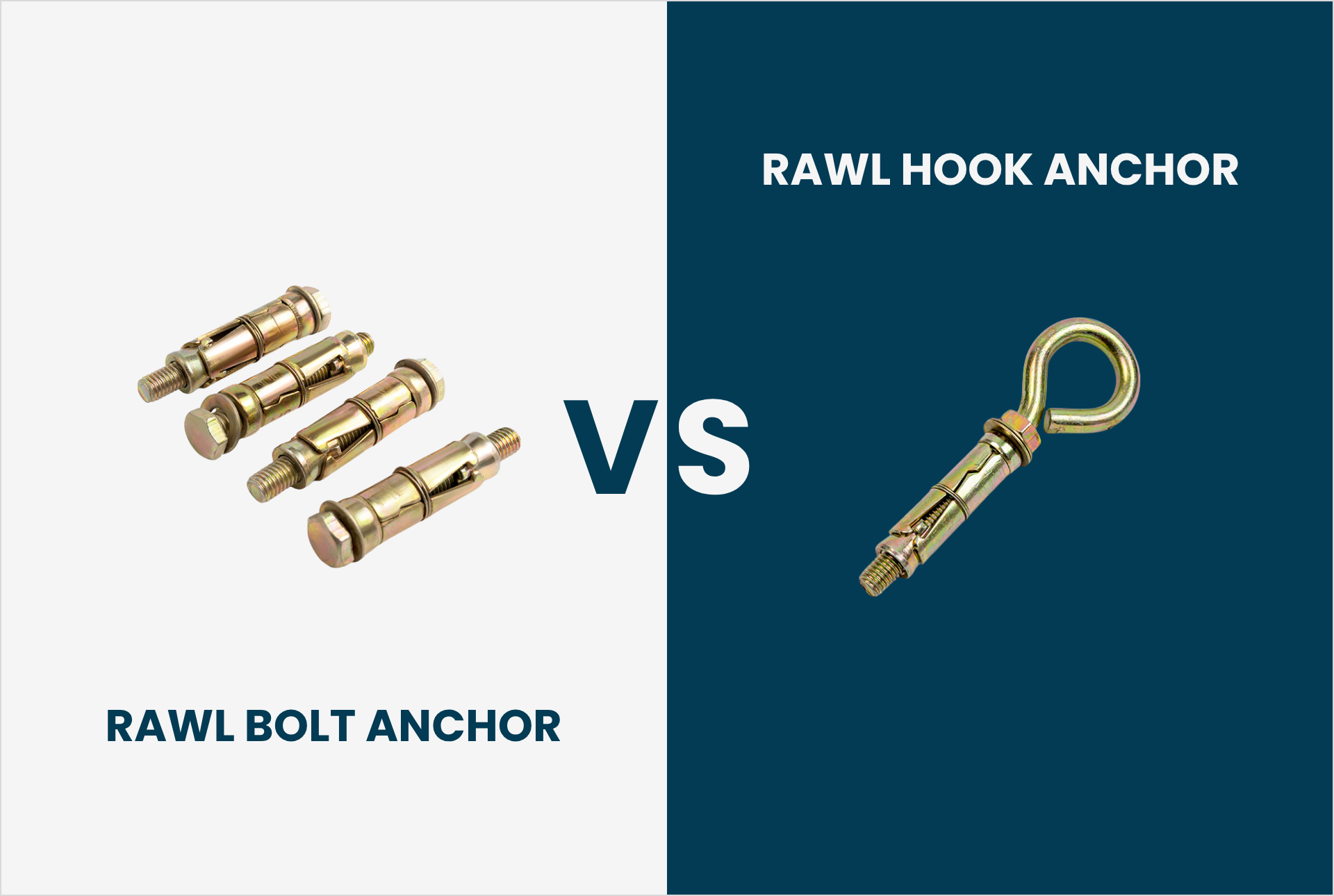
Rawl Bolt Anchors are made to hold things firmly. These anchors are perfect for base plates, brackets, rails, and equipment feet, as long as the load path has to stay in touch with the substrate. Rawl Bolt Anchors provide reliable performance due to their strong expansion-based holding mechanism. These anchors are strong enough to keep heavy goods in place for a long time.
They are useful for building and industrial usage since they include a growing mechanism that makes sure they have a solid grip. The Rawl Bolt Anchor has a straight threaded bolt with an expansion plate on it. Putting the sleeve into a hole and pulling it tight makes it spread outward and hold the fabric around it firmly. This makes a link that is safe and lasts a long time.
Rawl Hook Anchor
With these supports, you can quickly set them up and make changes without much trouble. It’s usually used for tension loads instead of big side loads or tight binding. Instead of a bolt head, the Rawl Hook Anchor features a hook. This makes it simple to hang or take down goods without having to fully unhook the anchor. The way to extend is similar to the Rawl Bolt Anchor’s, but the overall design puts simplicity of use and accessibility first. The steps for putting in a Rawl Hook Anchor are the same. This makes it a better option for things that need to alter a lot.
Most of the time, people utilise rawl hook anchors to hold up smaller things. They are sturdy enough for a lot of things, but not for erecting enormous things on top of them. You may use them to put items away, organise spaces, or hold up little amounts of weight in homes and workplaces. It’s crucial to choose between a Rawl Bolt Anchor and a Rawl Hook Anchor when an application needs it. If you need to hold a lot of weight, install anything permanently, or maintain the structure solid, a Rawl Bolt Anchor is the best solution.
Key Differences
| Aspect | Rawl Bolt Anchor | Rawl Hook Anchor |
| Fixture Interface | Secured using a bolt and washer arrangement that clamps the fixture tightly against the surface | Features an open hook design that allows components to be easily hung or suspended |
| Primary Use | Designed for rigid and permanent fixing of structural components and heavy fixtures | Primarily used for hanging or suspending loads that may need to be adjusted |
| Load Direction | Capable of handling both tensile and shear loads effectively | Mainly designed to handle tensile loads, where the weight is applied on a downward direction |
| Visibility | Installed beneath or through the fixture, typically remaining hidden once the assembly is complete | Hook remains exposed after installation, making it visible and accessible |
| Adjustment | Provides a fixed and secure position with little to no scope for repositioning after installation | Allows easy attachment and removal of items, offering flexibility in usage |
| Best For | Ideal for applications like brackets, base plates, machinery mounting etc | Best suited for hanging applications such as lights, signboards, and ducts |
Conclusion
One key thing to compare is the sorts of loads that each anchor can hold. When there are large tensile and shear stresses, rawl bolt anchors perform best because they expand into solid concrete to provide a strong and stable grip. They work well in structural and heavy-duty situations where the loads are always there or may shake. The kind of application, the type of load, and how easy it is to get to the anchors are all things that affect the decision between rawl bolt anchors and rawl hook anchors. On the other hand, rawl bolt anchors are built for applications that require a lot of strength, as well as durability, and stability over a long period of time. Using both kinds of anchors correctly lets you secure various portions of a project depending on their load and functional requirements.
Rawl hook anchors are great for hanging, supporting, or conveniently taking down parts. Rawl bolt anchors are a permanent and fixed solution, but rawl hook anchors are more flexible and useful in situations where access and adjustability are important. Both kinds of anchors may work well for their original purpose if they are installed correctly and on the suitable surface. Fastener World (India) has a wide range of rawl bolt anchors and rawl hook anchors in different sizes and finishes to meet the needs of different industries and construction projects. Choosing the appropriate anchor may make a big difference in how safe, efficient, and easy it is to install in a lot of different situations.