Rawl Bolt vs Wedge Anchor: Which Anchor Fastener Should You Use?
Introduction
Anchor fasteners are used to attach brackets, railings, base plates, machinery and structural supports to concrete or masonry. In construction and industrial applications, many purchasers may examine two typical alternatives, Rawl bolts and wedge anchors.
Both are mechanical expansion anchors but they aren’t the same. Design, grip, manner of installation and appropriateness differ for different foundation materials and load requirements. Wrong selection of an anchor may result in loosening, poor holding strength, concrete damage or dangerous installation.
For buyers purchasing from fastener manufacturers in India or buyers who deal with a regular fastener supplier, knowing the difference between a Rawl bolt and wedge anchor helps you choose the proper product for construction, fabrication, equipment and maintenance applications.
What Is a Rawl Bolt?
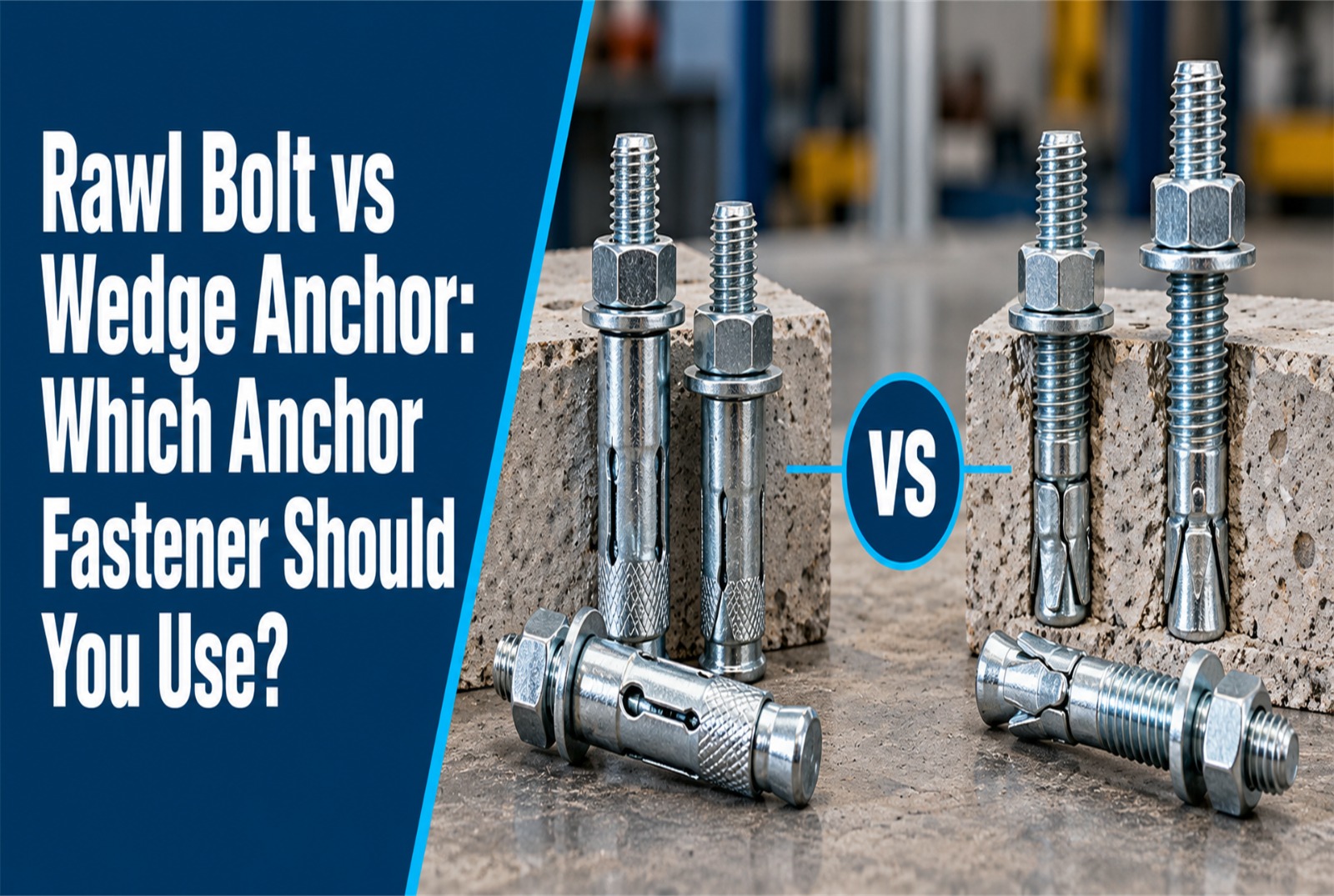
A Rawl bolt is a mechanical expanding anchor used to fasten things into concrete, brick or masonry. Usually it contains a bolt , sleeve and expander. When the bolt is tightened it stretches the sleeve inside the drilled hole and grabs the base material.
Rawl bolts are utilized in brackets, railings, gates, support frames, cable trays, light equipment bases and general building work. They are appreciated for their versatility and the fact that they come in a variety of shapes and sizes.
The holding strength of a Rawl bolt is governed by anchor size, hole diameter, embedment depth and the condition of the base material. If the hole is not drilled appropriately or the foundation material is weak the anchor may not grab adequately.
What is a Wedge Anchor?
Wedge anchors are high duty mechanical anchors often used in solid concrete. It is threaded and has a wedge clip at the bottom. As the nut is tightened the wedge expands against the drilled hole, creating a powerful grip.
The usage of wedge anchors results in better holding strength. Typical uses include machine bases, steel columns, pipe supports, heavy brackets, warehouse racks and industrial equipment installation.
Unlike other Rawl bolts, wedge anchors are not often recommended for hollow brick, block or weak masonry. They work best in excellent quality solid concrete where the anchor may extend and grasp well.
The Essential Design Difference
The key difference between a Rawl bolt and a wedge anchor is in how they expand. A sleeve that stretches around the bolt is often used in a Rawl bolt. The wedge anchor utilizes a wedge clip at the end of the anchor body.
This design means wedge anchors are commonly used for a stronger fastening in solid concrete. Depending on the kind of anchor, rawl bolts could give additional flexibility in applications involving concrete, brick or masonry.
Selection of Base Material
The choice of anchors is highly dependent on the base material. Wedge anchors and large duty Rawl bolts are normally supported into solid concrete. Brick, block or masonry may need a special Rawl bolt or other anchor for that material.
Expansion anchors bite into the interior of the drilled hole. If the foundation material is damaged, hollow, weak or too near to the edge, this pressure might create cracking or poor grip. Buyers are advised to examine the concrete grade, slab thickness, edge distance and spacing before installation.
For safety related activities such as equipment, railings or structural supports, the choice of anchor should not be relied on size alone. The load and the foundation material should be examined.
Application and Load Requirements
The anchor may be subjected to static, tensile, shear, dynamic or vibration loads. A light bracket does not need the same anchor as a machine base, steel support or hefty pipe clamp.
Rawl bolts are ideal for various general purpose and medium duty applications . They are often used for brackets, railings, gates, supports and equipment fixing when the load is mild and the substrate is adequate.
Wedge anchors are best for heavy-duty concrete fastening. They are recommended when the joint has to be secure under increased stress such as equipment anchoring, structural steel supports and warehouse racking.
Installation Process
“Rawl bolts and wedge anchors both need to be drilled properly. The hole must be the same size as the anchor. Too big a hole and the anchor will turn or pull out. If the hole is too tiny, installation may harm the concrete or anchor.
With a Rawl bolt, you place the anchor into the hole you bore and tighten it so that the sleeve extends. To install a wedge anchor, the anchor is passed through the fixture or straight into the hole and the nut is tightened to widen the wedge clip.
And hole depth matters, too. The anchor has to be driven to the desired embedment depth to create sufficient holding strength. Clean surface before installation. Dust and debris from drilling might diminish the grip.
Selection of Coatings and Corrosion
Anchor fasteners come in a variety of materials and finishes. Zinc plated anchors are best for dry and indoor applications. Hot dip galvanized anchors are best suited for outdoor, wet or exposed settings. Stainless steel anchors are used in chemical facilities, coastal and corrosive environment.
Galvanized or stainless steel is typically a preferable choice for outside constructions, moist regions, or long term installs. The choice of coating should not be taken lightly since corrosion might weaken the anchor over time.
What Anchor Should You Use?
Rawl bolts are used when the application calls for a dependable mechanical anchor for concrete or masonry, and the load is moderate to heavy depending on the size specified. They are suitable for general building, fences, gates, brackets, support frames and maintenance works.
Wedge anchors are used for a firm fastening in solid concrete. Suitable for machine bases, steel supports, pipe supports, columns, warehouse racks and other industrial applications.
Before buying, purchasers should check anchor size, thread size, length, embedment depth, base material, load type, coating, installation technique and working environment. They also need to consider if the anchor will be exposed to vibration, dampness, chemicals or the outdoors.
A good fastener provider can assist match the anchor to the application on more than just pricing. Experienced fasteners manufacturers in India can also provide the standard and bulk needs for industrial and building projects.
Final Thoughts
Rawl bolts and wedge anchors are both good anchor fasteners, although they are meant for distinct uses. Rawl bolts are a flexible anchor for Concrete & masonry use. Wedge anchors are the best choice for sturdy, heavy duty anchoring into solid concrete.
What is suitable for one base material, load, vibration, embedment depth, exposure to corrosion and technique of installation may not be for another. Anchors should be properly verified before usage for essential applications.
Fastener World (India) can help purchasers seeking for Rawl bolts, wedge anchors, anchor fasteners and other industrial fasteners by application, size, material, coating and quantity needs.