Choosing the Right Fasteners for Electric Vehicles
Electric cars are subjected to harsh circumstances of vibration, thermal expansion, dampness and mechanical stress. The wrong fastener may result in loosening, corrosion, electrical problems, structural instability and greater maintenance over time. Fasteners for EV applications consequently need to have good clamping force, corrosion resistance, thermal stability and compatibility with lightweight materials like aluminium and composites.
As well as mechanical strength, EV fasteners may also need to provide electrical insulation, vibration resistance and long-term reliability in sensitive battery and electronic systems. Knowledge of these operating circumstances enables manufacturers and engineers to pick fastening systems which enhances vehicle safety, durability and overall performance.
Importance of Fasteners in Electric Vehicles
Fasteners are employed throughout electric cars to firmly attach structural and functional components. They are utilized extensively in battery packs, chassis systems, electric motors, control units, suspension systems and interior assemblies. The dependability of fasteners is crucial for the long-term functioning of EVs because of the delicate electrical and mechanical systems they include.
Especially fastening solutions for battery systems have to be particularly reliable. Battery enclosures also need to withstand vibration, temperature extremes and external forces. Improper fastening might cause loosening, movement of components or reduction of the protection of the internal battery modules.
Electric cars also have an instantaneous torque delivery which may lead to continual dynamic loadings on coupled components. Consequently, fasteners must retain their clamping power for long durations without failure.
Factors to Consider When Selecting EV Fasteners
The appropriate fasteners have an instant impact on safety, durability, vibration resistance, thermal performance and long-term dependability. Manufacturers consider weight reduction while adopting EV Fasteners. Choosing fastener materials is an essential feature of vehicle design that may impact driving range and energy economy via the use of lightweight materials.
In addition to mechanical strength, current EV fasteners may need corrosion resistance, electromagnetic compatibility and thermal management capabilities to support sophisticated vehicle systems. The ongoing evolution of electric cars with greater battery capacity, quicker charging technologies and enhanced performance criteria are driving the automotive industry’s increasing need for specialist fastening solutions.
By understanding the major elements involved in choosing EV Fasteners, manufacturers, engineers and suppliers are better able to increase vehicle safety, dependability, efficiency and long-term performance.
Materials and Coatings Used in EV Fasteners
There are several considerations in fastener selection for electric vehicle applications. Another significant property is resistance against rusting. EVs are often exposed to outside elements including rain, humidity, road salts and temperature changes. Corrosion resistant fasteners are needed in proximity to battery systems or underbody assemblies for long term durability. EV applications need heat resistance just as much.
During operation, battery packs, motors and electrical systems may generate significant heat. Even in case of prolonged exposure to varied temperatures mechanical properties of fasteners must not change. Another concern is the compatibility of materials. To reduce the overall weight, electric automobiles are generally made from aluminium, stainless steel, plastics and composite materials.
The fastener used should be compatible with these materials and should not produce galvanic corrosion or damage the assembly. Ease of installation is another consideration in huge production. Faster assembly, accurate torque control and repeatability of fasteners help to improve production efficiency and minimize installation errors.
Common Fasteners Used in EV Applications
Electric cars are revolutionising the automobile industry with innovative battery systems, lightweight architecture and high-performance electric drivetrains. The batteries, charging technologies and electric motors may get the most attention, but fasteners are just as important in the construction of electric vehicles. Fasteners are the pieces that firmly attach structural components, electrical systems, battery assemblies, interior components and safety devices throughout the vehicle.
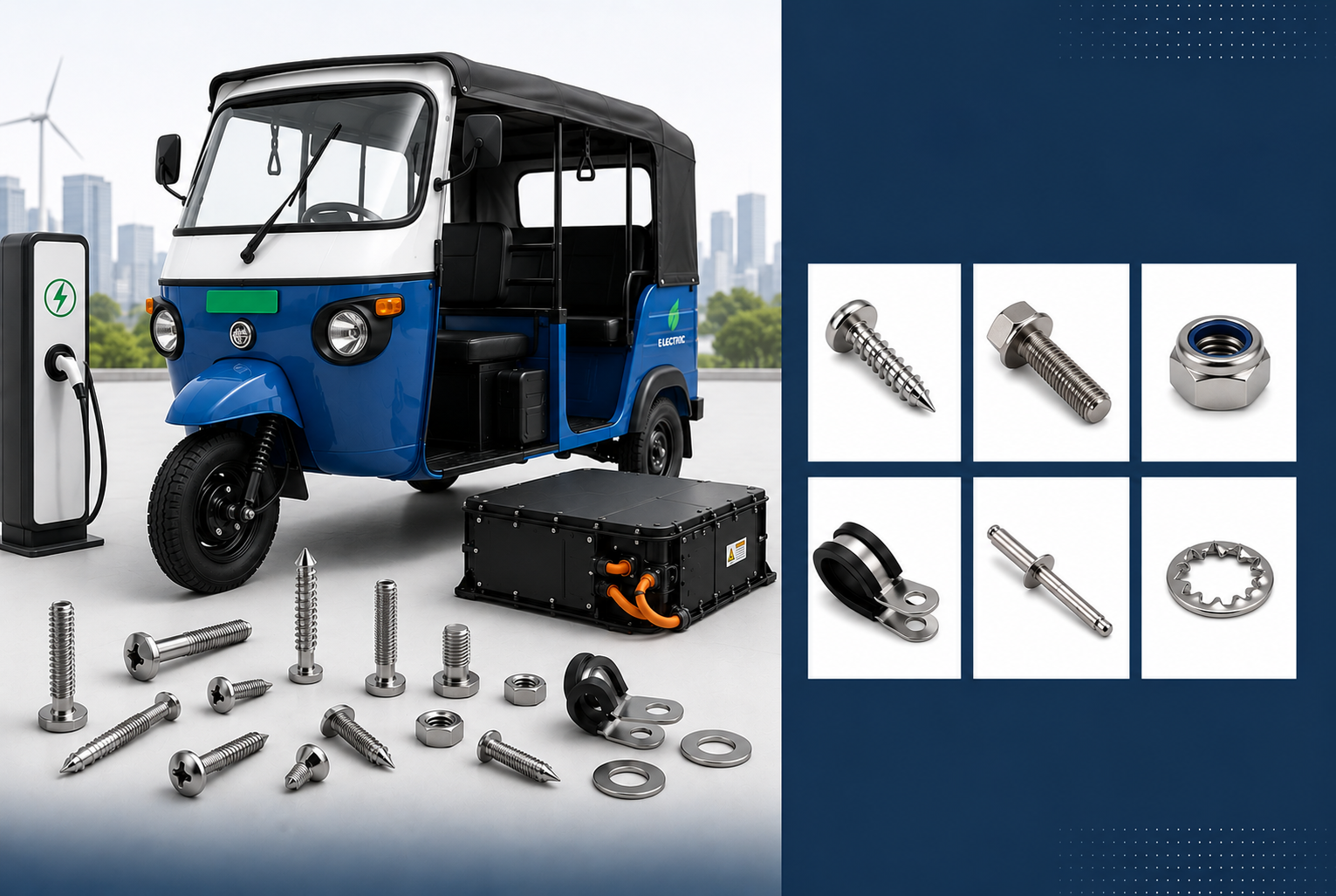
Robust fastening systems are essential to preserve structural stability, electrical safety, and long-term durability of electric cars under challenging operating circumstances. Different types of fasteners are used across electric vehicle systems depending on the application requirements. Hex bolts are commonly used in structural assemblies, chassis systems and battery enclosures because they provide strong and secure fastening. Flange bolts are widely used where better load distribution is required.
The integrated flange helps spread the clamping force across a larger surface area, reducing the need for additional washers in some applications. Nyloc nuts and prevailing torque nuts are often used in EV systems exposed to vibration. These nuts help reduce the chances of loosening during operation and improve long-term joint stability. Socket head screws and machine screws are commonly used in electrical assemblies, control units and compact spaces where precision installation is necessary.
Choosing the Right Fastener for Long-Term Performance
What works effectively in one area may not necessarily be appropriate for another application. For example, battery systems may need corrosion resistance and vibration management, while structural assembly may need better tensile strength.
The choice of fastener should be based on the operating environment, the material compatibility and the predicted service conditions. The choosing method should take into account the exposure to moisture, thermal expansion, frequent vibration and ease of maintenance.
The use of high grade fasteners also increases the long term dependability and lowers the chance of premature failures. Poor quality fasteners may lead to loosening, corrosion or diminished structural integrity over time, particularly in harsh EV applications.
At Fastener World (India), we provide a wide range of industrial fasteners suitable for electric vehicle applications, including stainless steel fasteners, high-tensile fasteners, coated fasteners and customised fastening solutions. Selecting the appropriate fastener helps improve safety, performance and long-term dependability across modern EV systems.